
How SEO and Influencer Marketing Boost Amazon Sales (2025)
23rd
December, 2025
Influencer Marketing
Amazon Marketplace
Artificial Intelligence
TikTok Tips
In the battle for online visibility, e-commerce brands and Amazon sellers face intense competition. Traditional search engine optimization (SEO) is essential for driving organic traffic, but it’s no longer the only game in town. Enter influencer marketing – a strategy embraced by 93% of marketers today – where social media creators, from micro influencers to mega-stars, promote your brand to engaged audiences. SEO and influencer marketing might seem like separate worlds, but together they form a powerful duo. This post explores how influencer collaborations can amplify your SEO, improving Google rankings and even boosting your Amazon product visibility. You’ll learn the key benefits of this synergy – from high-quality backlinks and social signals to user-generated content – and how to leverage them for e-commerce success.
SEO and Influencer Marketing: Why This Duo Matters in 2025
Modern SEO is about more than on-site keywords and technical tweaks; it’s about authority, relevance, and user experience. Influencer marketing, on the other hand, builds trust and awareness through authentic content and social engagement. In 2025, these two strategies increasingly intersect. Social media platforms like Instagram and TikTok are no longer “walled gardens” – their content can appear in Google results. This means influencer posts (reels, videos, etc.) can become SEO assets, blurring the line between social and search.
For e-commerce entrepreneurs, the implication is clear: combining SEO with influencer campaigns can multiply your results. Here’s why this duo is so impactful:
-
- Diversified Traffic Streams: Influencers direct fresh visitors to your site or Amazon listing, complementing organic search traffic.
- Quality Content at Scale: Content creators produce reviews, tutorials, and unboxing posts that you can repurpose on your site, keeping it updated and rich in keywords.
- Trust Signals: When real people vouch for your brand, it boosts credibility – something search algorithms reward through higher click-through rates and engagement metrics.
- Competitive Edge: Few of your competitors may be fully leveraging SEO and influencer marketing together, so this combo can set your brand apart.
- Diversified Traffic Streams: Influencers direct fresh visitors to your site or Amazon listing, complementing organic search traffic.
Below, we break down the key benefits of this synergy and how it works in practice.
Unlock the Power of Micro Influencers and Elevate your Brand Today!
Key Benefits of SEO and Influencer Marketing Synergy

SEO focuses on improving your site’s visibility in search engines, while influencer marketing expands your reach through people-driven promotion. When used together, they create a feedback loop: influencers drive traffic and engagement that improve SEO, and better SEO means more people discover your brand (making influencer content even more effective). Let’s explore the core benefits of this synergy:
1. Quality Backlinks: Influencers Boost Your Site Authority
One of the most powerful SEO benefits influencers provide is backlinks – links from their content back to your site. When an influencer writes a blog post featuring your product or adds your link in a YouTube video description, it creates a valuable off-site backlink. These inbound links act like endorsements or “votes of confidence” in the eyes of Google. High-quality backlinks from reputable, relevant influencers can elevate your domain authority, a key ranking factor. In simple terms, search engines see that trusted voices are referring to your site, indicating that your content is valuable.
The SEO impact of influencer-generated backlinks includes:
-
- Higher Search Rankings: Backlinks remain one of the top ranking factors. Earning links from influencer blogs or social profiles (like an influencer’s personal website or Medium article) signals to Google that your site is credible. This can boost your rankings on search engine results pages (SERPs).
- Referral Traffic: Influencer links drive their followers directly to your website or online store, delivering a surge of targeted traffic. These visitors are often high-intent (they clicked because they trust the influencer’s recommendation), leading to longer time on site and lower bounce rates – positive signals for SEO.
- Link Diversity: Influencers often publish on various platforms (blogs, news sites, social media), giving you a diverse backlink profile. A natural link profile with varied sources further strengthens SEO.
- Higher Search Rankings: Backlinks remain one of the top ranking factors. Earning links from influencer blogs or social profiles (like an influencer’s personal website or Medium article) signals to Google that your site is credible. This can boost your rankings on search engine results pages (SERPs).
Pro Tip: To maximize this benefit, provide influencers with shareable resources – e.g. a product guide, a discount page, or a valuable blog post – that they can easily link to. Encourage collaborations like guest posts or product reviews on their own sites. Each such backlink is an SEO asset that can keep driving traffic long-term.
2. Social Signals & Engagement: Indicators of Relevant Content
In the era of social media, SEO isn’t confined to what happens on Google. Social signals – likes, shares, comments, and overall engagement on platforms like Instagram, TikTok, YouTube, and Facebook – correlate with better search performance. When your influencer marketing campaign drives a flurry of social activity, it indirectly boosts your SEO in several ways:
-
- Content Visibility and Sharing: Suppose an influencer’s post about your product goes viral or at least gains significant traction (hundreds of shares, comments, etc.). This amplified reach means more people are talking about and searching for your brand, which can lead to more branded searches and even spur journalists or bloggers to mention you (earning secondary backlinks). Viral social content often gets picked up by search engines for quick indexing, meaning your content could appear in search results faster due to the surge in interest.
- Improved User Behavior Metrics: Social traffic can boost on-site engagement metrics. For example, followers who click an influencer’s link to your site are likely already interested, so they tend to spend more time browsing and have a lower bounce rate. Google’s algorithm pays attention to user behavior signals like dwell time. High engagement from socially-referred visitors indicates your site content is relevant and valuable, which can support higher rankings.
- Brand Signals to Algorithms: Every like, comment, or mention is a sign that your brand is generating buzz. While Google doesn’t explicitly count Facebook likes or Twitter followers as ranking factors, there’s a strong correlation between top-ranking pages and strong social presence. In fact, content that performs well on social media often sees a lift in search rankings because of the secondary effects (more traffic, backlinks, and brand awareness).
- Content Visibility and Sharing: Suppose an influencer’s post about your product goes viral or at least gains significant traction (hundreds of shares, comments, etc.). This amplified reach means more people are talking about and searching for your brand, which can lead to more branded searches and even spur journalists or bloggers to mention you (earning secondary backlinks). Viral social content often gets picked up by search engines for quick indexing, meaning your content could appear in search results faster due to the surge in interest.
It’s also worth noting that engagement from authoritative users – for instance, a well-known creator or industry expert sharing your content – can be especially impactful. Search engines may interpret these signals as indicators of trust and relevance.
Pro Tip: Encourage engagement by creating share-worthy content in your influencer campaigns. Ask influencers to pose questions or challenges to their followers involving your product. For example, an influencer might prompt, “Comment with your biggest skincare challenge – [Brand] helped me solve mine!” Such tactics boost comments and shares. The resulting engagement not only expands your reach but also creates a flurry of social proof around your brand that can indirectly benefit your SEO.
3. Fresh Content & UGC: Keeping Your Site Relevant
Consistently publishing fresh, relevant content is an SEO best practice – it gives search engines more material to index and signals that your site is up-to-date. Influencer marketing can function like a content engine for your brand. By collaborating with creators, you gain access to a stream of user-generated content (UGC) and influencer-produced media that can be leveraged for SEO:
-
- Content Creation at Scale: Influencers excel at producing engaging content – be it blog articles, Instagram Reels, TikTok videos, or long-form YouTube tutorials. When they feature your products, you can often reshare or integrate that content into your own website (with permission). For example, an influencer’s tutorial video can become an embedded piece of content on your product page, enhancing the page’s quality and depth. Google rewards pages that provide comprehensive, helpful information.
- Long-Tail Keywords and SEO Keywords: Influencers often naturally mention your brand’s keywords or related terms in their content. A tech influencer reviewing a gadget might use phrases like “unboxing [Product Name]” or “[Brand] user experience”. These mentions associate your brand with relevant search terms. If you provide influencers with certain long-tail keywords (e.g., “organic cotton toddler blanket safety”), they might incorporate them in a blog or video description. Over time, this builds semantic connections that can help your search rankings for those terms.
- UGC and Reviews Build Trust (E-E-A-T): Search engines are increasingly focused on E-E-A-T – Experience, Expertise, Authoritativeness, Trustworthiness – in content. Genuine reviews, testimonials, and posts from real users (which influencers often encourage their followers to create) add “experience” and authenticity to your brand’s online presence. For instance, a campaign where customers post their own photos or reviews with a hashtag creates a trove of UGC. Google sees that people-first content is surrounding your brand, which acts as a strong trust signal. Additionally, positive reviews on blogs or video testimonials can directly boost conversions and time-on-site when embedded on your pages.
- Content Creation at Scale: Influencers excel at producing engaging content – be it blog articles, Instagram Reels, TikTok videos, or long-form YouTube tutorials. When they feature your products, you can often reshare or integrate that content into your own website (with permission). For example, an influencer’s tutorial video can become an embedded piece of content on your product page, enhancing the page’s quality and depth. Google rewards pages that provide comprehensive, helpful information.
Consider creating a hashtag campaign with your influencers to spur UGC. For example, a fitness brand might have #MyWorkoutWith<Brand> where followers post their exercise clips using the brand’s gear. This not only spreads your brand on social platforms but also gives you fresh content to feature on your site (e.g., a gallery of customer workout videos) – keeping your site content fresh and engaging for visitors and search engines alike.
4. Brand Awareness & Search Demand: Higher Visibility in Search
One often-overlooked benefit of influencer marketing on SEO is the boost in brand awareness. When an influencer exposes your brand to tens of thousands of new people, many will become curious and perform a search for your brand or product. These branded searches are gold for SEO – they signal to search engines that your brand is in demand and relevant. In practical terms, here’s how increased brand visibility from influencers improves your overall search performance:
-
- More Branded Search Volume: Suppose your company is called “GlowSkincare” and a skincare guru on YouTube features your product. Viewers who trust the guru may not click the link immediately but later search “GlowSkincare serum” on Google. A spike in such searches can improve your standing – if Google sees more users seeking your site directly, it often rewards you with better rankings for both branded and related keywords. It’s an indication of rising popularity and relevance.
- Higher Click-Through Rates (CTR): Influencer marketing builds trust. When someone who has seen your brand on social media later encounters your website in the Google results, they’re more likely to click it. A strong brand presence can lead to a higher organic CTR (people choosing your result over others), which is a positive ranking signal in Google’s algorithm. Essentially, prior exposure warms up the audience, so your search listings get more love.
- Improved E-A-T through Mentions: Influencers are often seen as niche experts or at least authorities in the eyes of their followers. If multiple respected creators mention your brand or products, it enhances your brand’s perceived expertise and authority. For instance, if tech influencers refer to your app as a must-have tool, that external validation contributes to your brand’s credibility. Google’s quality guidelines favor brands that show strong authority and trustworthiness in their space. Mentions on reputable sites or by known figures (even if not linking to you) can indirectly support this. Think of it as digital word-of-mouth that elevates your brand reputation.
- Social Proof on Search Results: Sometimes, influencer activity even finds its way directly into search results. Tweets (now X posts), YouTube videos, or Instagram posts from influencers might rank for your brand name. This populates the search results page with rich, positive content about your brand, which can entice more clicks and further reinforce trust.
- More Branded Search Volume: Suppose your company is called “GlowSkincare” and a skincare guru on YouTube features your product. Viewers who trust the guru may not click the link immediately but later search “GlowSkincare serum” on Google. A spike in such searches can improve your standing – if Google sees more users seeking your site directly, it often rewards you with better rankings for both branded and related keywords. It’s an indication of rising popularity and relevance.
In summary, influencer marketing doesn’t just generate buzz – it lays a foundation of awareness that makes all your other marketing (including SEO) work better. When your target customers recognize your name and associate it with positive experiences, they engage more readily. Higher engagement and more branded searches are signals that feed back into better SEO performance.
5. Micro-Influencers: Niche Creators with Outsized Impact

When crafting an influencer marketing strategy for SEO benefits, bigger isn’t always better. Micro-influencers – those with smaller follower counts (often in the 5,000 to 100,000 range) – can be especially powerful allies for e-commerce brands. Why? Because they typically have highly engaged, loyal audiences and come across as authentic and relatable. This translates into strong results for your brand online:
-
- Higher Engagement Rates: Micro-influencers often see much higher engagement relative to their follower size. In fact, studies show they drive up to 60% more engagement than macro-influencers. Their audience is more likely to like, comment, and share their posts. For your brand, this means any given piece of content (a post, review, or unboxing video) from a micro-influencer is likely to generate a flurry of interactions – amplifying the social signals and reach of your message. A dozen micro-influencer posts sparking conversations can sometimes outperform one post from a celebrity that many see but few act upon.
- Authentic Content and Trust: Because micro-influencers build close-knit communities around niche interests, their endorsements feel more genuine. Followers tend to trust their recommendations the way they would a friend. This trust leads to more people clicking through to check out your site or product, and it can foster UGC as their followers may start talking about your brand too. Authentic word-of-mouth marketing boosts E-E-A-T signals (people genuinely vouching for your brand experience).
- Budget-Friendly Scaling: From a practical standpoint, micro-influencers are cost-effective, allowing you to engage several of them for the price of one mega-influencer. This means you can scale up the volume of content and mentions your brand gets. Dozens of mentions across the web – even if each is to a smaller audience – create a widespread web presence that benefits SEO through multiple backlinks and lots of social chatter. It also mitigates risk; if one influencer falls through, you still have others creating content for you.
- Niche Targeting = Relevant Traffic: Micro-influencers usually cater to very specific interests (e.g., a micro-influencer might focus on vegan baking or home office organization). Partnering with those who fit your product niche ensures the traffic coming from their recommendations is highly qualified. For example, if you sell eco-friendly pet toys, a micro-influencer known for pet care tips will send pet owners to your site – visitors who are likely to stay, engage, and convert. High relevance means better on-site engagement and conversion, which, again, is good for SEO and business overall.
- Higher Engagement Rates: Micro-influencers often see much higher engagement relative to their follower size. In fact, studies show they drive up to 60% more engagement than macro-influencers. Their audience is more likely to like, comment, and share their posts. For your brand, this means any given piece of content (a post, review, or unboxing video) from a micro-influencer is likely to generate a flurry of interactions – amplifying the social signals and reach of your message. A dozen micro-influencer posts sparking conversations can sometimes outperform one post from a celebrity that many see but few act upon.
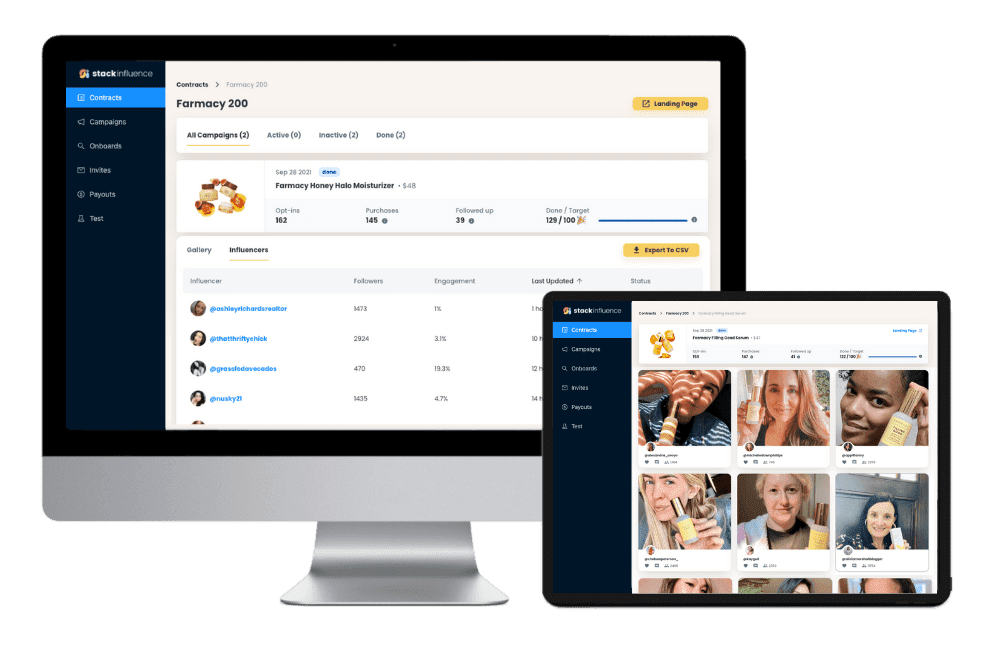
Example: Stack Influence, an influencer marketing platform, specializes in connecting brands with micro-influencers at scale. By using a platform like this, an Amazon seller or small DTC brand can efficiently recruit hundreds of authentic content creators to review products or share testimonials. The result is a network of organic mentions and links across blogs, Instagram, YouTube, and more – creating an SEO ripple effect. When micro-creators talk about your product, you gain both the immediate traffic boost and the longer-term search benefits of increased brand presence.
In short, micro-influencers punch above their weight when it comes to blending influencer marketing with SEO. Their contributions might come in smaller doses, but collectively they add up to significant SEO gains.
Influencer Marketing for Amazon Sellers: Boosting Product Rankings
So far, we’ve discussed how influencers help with Google and overall web SEO. But what if you’re an Amazon seller whose primary “search engine” is Amazon’s own algorithm? Good news – influencers can help here too. Amazon’s A10 algorithm (the latest update to Amazon’s search ranking system) heavily rewards sales velocity and external traffic. Influencer marketing can drive both:
-
- External Traffic Signals: When an influencer directs their fans to your Amazon product listing (via an affiliate link or a promo code swipe-up, for example), you’re sending a surge of external visitors to Amazon. Amazon’s algorithm notices this influx of shoppers coming from outside its ecosystem. It considers external traffic a sign of a popular, in-demand product, and tends to reward it. In fact, when outside visitors purchase your products, Amazon boosts your organic ranking for those product keywords. It’s like telling Amazon, “People off-site are excited about this item,” which can push your listing higher in Amazon’s search results.
- Higher Sales Velocity & Conversion: Influencers not only bring traffic – they bring buyers. Often, their audience has high purchase intent (they trust the influencer’s recommendation). This can lead to a spike in your sales over a short period. Amazon tracks how quickly and consistently your product sells (sales velocity). A well-timed influencer campaign (say, during a product launch or a seasonal promotion) can significantly increase your sales velocity. For example, a tech gadget recommended by a YouTube tech reviewer might sell out in a day. This sales burst can catapult your product from page 5 to page 1 for relevant searches on Amazon, as the algorithm interprets the sales surge as a signal of relevance and popularity.
- Building Reviews and UGC on Amazon: Some influencers run campaigns encouraging their followers to leave reviews or content on Amazon (within Amazon’s terms of service). While you must be careful to follow Amazon’s rules (no incentivizing fake reviews), the exposure often naturally leads to more genuine reviews. A higher number of positive reviews improves conversion rates for future shoppers and can indirectly improve your product’s visibility (products with better ratings and review counts tend to rank higher on Amazon).
- External Traffic Signals: When an influencer directs their fans to your Amazon product listing (via an affiliate link or a promo code swipe-up, for example), you’re sending a surge of external visitors to Amazon. Amazon’s algorithm notices this influx of shoppers coming from outside its ecosystem. It considers external traffic a sign of a popular, in-demand product, and tends to reward it. In fact, when outside visitors purchase your products, Amazon boosts your organic ranking for those product keywords. It’s like telling Amazon, “People off-site are excited about this item,” which can push your listing higher in Amazon’s search results.
Tip for Amazon sellers: Use Amazon’s Attribution links or affiliate links with your influencers. This not only tracks the traffic and sales they drive (so you can measure ROI), but Amazon’s Brand Referral Bonus program even rewards you a percentage back for bringing external sales. It’s a win-win: you get a rebate, higher rankings, and more sales, while the influencer earns their commission or fee for driving those sales.
Lastly, don’t forget that boosting your brand’s off-Amazon SEO can also help Amazon sales. If your own website’s content (blog posts, press releases, etc.) ranks on Google for product-related searches, you can funnel that traffic to Amazon. Influencer collaborations can assist here as well – for instance, a blog influencer writes an article that ranks on Google and points readers to your Amazon page. In an omnichannel world, SEO and influencer marketing together ensure your brand is discoverable everywhere your customers search.
Unlock the Power of Micro Influencers and Elevate your Brand Today!
Conclusion to How SEO and Influencer Marketing Boost Amazon Sales (2025)
In 2025 and beyond, the lines between search engines and social media are fading. Brands that merge SEO and influencer marketing stand to gain an outsized advantage in the digital marketplace. By leveraging influencers to create buzz, backlinks, and authentic content, you feed the SEO machine with exactly what it craves – relevance, authority, and user engagement. In turn, strong SEO amplifies the reach and longevity of your influencer campaigns, creating a virtuous cycle of traffic and brand growth.
For e-commerce brands and Amazon sellers, this strategy can be a game-changer. Imagine your product being recommended by trusted creators, causing a spike in searches and sales – and then finding your website or Amazon listing steadily climbing to the top of the rankings as a result. The end outcome is not just higher rankings but tangible business wins: more organic traffic, higher conversion rates, and increased revenue.
Don’t let your marketing efforts exist in silos. It’s time to align your influencer outreach with your SEO goals. Start by identifying influencers in your niche who can provide quality links or create content around your target keywords. Provide them with the resources to succeed, and ensure you’re tracking the results (both on search and on-site analytics). With each collaboration, you’re not only reaching a new audience today – you’re also laying groundwork for sustained organic visibility tomorrow.
Ready to amplify your online presence? By combining the credibility of influencer marketing with the discoverability of SEO, even smaller brands can punch above their weight. Whether you’re a growing DTC brand or an Amazon seller aiming for page-one rankings, the message is clear: integrating influencers into your SEO strategy can drive compounding returns. Embrace this powerful combination, and watch your search rankings climb alongside your sales.

By William Gasner
CMO at Stack Influence
William Gasner is the CMO of Stack Influence, he's a 6X founder, a 7-Figure eCommerce seller, and has been featured in leading publications like Forbes, Business Insider, and Wired for his thoughts on the influencer marketing and eCommerce industries.
Want new articles before they get published? Subscribe to our Awesome Newsletter.
stack up your influence
turning creativity into currency
our headquarters
111 NE 1st St, Miami, FL 33132
our contact info
[email protected]
stack up your influence
turning creativity into currency
our headquarters
111 NE 1st St, 8th Floor
Miami, FL 33132
our contact info



© 2025 Stack Influence Inc
© 2025 Stack Influence Inc