




Imagine freeing yourself from the daily grind of manual posting. For busy e-commerce entrepreneurs, Amazon sellers, and DTC founders, keeping up with Instagram can feel like a full-time job. That’s where learning how to schedule Instagram posts in 2026 comes in. By planning and automating your content, you can maintain a consistent Instagram presence that drives engagement and sales – without the 3 A.M. alarms or last-minute scrambles. In this guide, we’ll break down the benefits of scheduling (especially for online brands), review the top methods and tools to do it, and share pro tips on timing, influencer marketing integration, and leveraging UGC (user-generated content). Let’s dive in so you can spend less time posting and more time growing your business.
Why Schedule Instagram Posts? (Benefits for E-Commerce Brands)

Scheduling Instagram posts isn’t just about convenience – it’s a strategic move for influencer marketing and e-commerce success. Here are some key reasons e-commerce brands and Amazon sellers should embrace an Instagram scheduler:
- Save Time & Boost Productivity: Small teams (or solo founders) can automate routine posting tasks and reclaim hours. In fact, because nearly 38% of social media managers operate solo, using a scheduler is critical to maximize limited time. Instead of interrupting your day to hit “post,” you can batch your work and focus on bigger priorities (customer service, product development, etc.).
- Consistency & Algorithm Love: Posting regularly keeps your brand visible and followers engaged. Instagram’s algorithm rewards consistent activity – and content that generates quick engagement. By planning ahead, you ensure there’s always something queued up for your audience at the right time. (One study even found that posting just twice a week achieved the highest engagement rate of ~4% on Instagram, proving that a steady rhythm beats sporadic bursts.)
- Optimal Timing for Engagement: Schedulers let you target peak activity periods effortlessly. Rather than hoping you remember to post when your followers are online, you can set content to go live at the optimal times (like lunchtime or early evening, depending on your audience data). Hitting those peak time slots means more likes, comments, and saves – without you having to drop what you’re doing.
- Reach a Global Audience: If you sell internationally (common for Amazon marketplace sellers), your customers may be in different time zones. Scheduling ensures you can “post while you sleep” so that an overseas audience sees your content during their daytime. This around-the-clock presence helps build an international community without burning you out.
- Strategic Planning & Quality Control: Laying out posts in advance helps you craft a cohesive content calendar. You can coordinate Instagram content with product launches, sales events, or holidays. It also gives you time to polish captions, graphics, and hashtags for maximum impact. The result? Higher-quality posts that feel on-brand and well-timed, rather than rushed afterthoughts.
- Integrate Influencers & UGC: Scheduling isn’t just for your own content – it’s perfect for integrating posts from micro influencers and happy customers. For example, the micro-influencer platform Stack Influence connects e-commerce brands with thousands of creators, enabling campaigns where a single brand might work with hundreds of micro influencers to generate authentic social media posts. This means you can have a steady pipeline of influencer content (think unboxing videos, reviews, lifestyle photos) to fill your Instagram schedule. Such user-generated content is gold: 92% of consumers trust word-of-mouth and UGC more than traditional ads, so weaving these posts into your calendar can seriously boost credibility and engagement.
In short, scheduling Instagram posts allows online brands to be more consistent, strategic, and efficient – all while keeping your feed full of engaging content (including those influencer shout-outs and customer photos that build trust). Now, let’s look at how exactly to do it.
How to Schedule Instagram Posts in 2026: 5 Easy Methods
There’s no one-size-fits-all way to schedule your Instagram content. Depending on your workflow and resources, one method may suit you better than another. Below we explore five reliable ways to plan and schedule posts on Instagram – choose the approach (or combination) that fits your needs:
1. Schedule Posts Natively in the Instagram App
The simplest option is to use Instagram’s built-in scheduling tool, available in the mobile app for professional accounts. Instagram now allows Business and Creator accounts to schedule feed posts and Reels up to 75 days in advance (and up to 25 posts per day) directly from the app. This native feature is free and convenient – no extra software needed.
How to use Instagram’s native scheduler:
- Switch to a Professional Account: Ensure your Instagram is a Business or Creator profile (required for scheduling). This is a quick, free switch in your settings if you haven’t done so already.
- Create a Post or Reel: In the Instagram app, tap the + create button and craft your post as usual – add your photo/video, edit it, write a caption, tag products or people, etc.
- Select “Schedule” in Advanced Settings: Instead of posting immediately, go to Advanced Settings (on the final screen before posting). Toggle on Schedule (Schedule This Post) and you’ll be prompted to pick a date and time.
- Choose Date & Time: Set the future date and time when you want the content to go live. Remember to consider your audience’s time zone and peak activity periods when choosing the time.
- Schedule the Post: Once your time is set, tap Schedule. That’s it – Instagram will queue the post to publish automatically at the scheduled moment. You can repeat this process to line up multiple posts days or weeks ahead.
Managing scheduled posts: Instagram also lets you view and adjust scheduled content. On your profile, open the menu (☰) and navigate to Scheduled Content to see all upcoming posts. From there, you can tap any scheduled post to edit it, reschedule the time, or publish it immediately if needed. This flexibility ensures you can still tweak captions or timings if plans change.
Pros & Cons: Scheduling natively is great because it’s free, easy, and doesn’t require leaving the Instagram app. It’s perfect for straightforward scheduling of feed posts or Reels, especially for creators who prefer working on mobile. However, there are a few limitations: you currently cannot schedule Stories via the app’s tool (only feed posts and Reels), and you must remember to use the mobile interface (which might not be ideal for those who work primarily on desktop). Additionally, the app won’t provide the advanced content calendar view or analytics that some third-party tools offer.
2. Use Meta Business Suite (Facebook/Instagram Creator Studio)
If you prefer managing content on a desktop computer or want more robust planning features, Meta Business Suite is a powerful (and free) solution. Since it’s an official tool from Facebook/Instagram’s parent company, it integrates seamlessly with your accounts. Meta Business Suite allows you to schedule Instagram posts, Reels, and even Stories from your computer, and it also lets you cross-post to Facebook easily.
Getting started with Business Suite: Go to the Business Suite website (business.facebook.com) and log in with your Facebook account that’s linked to your Instagram Business profile. Choose your Instagram account in the dashboard, then use the Create Post option. You can upload images or videos, write your caption and hashtags, and then choose Schedule instead of Publish. Pick the date and time for Instagram (and Facebook, if cross-posting) and confirm. Your post will be queued and published automatically at that time.
Why Business Suite is useful:
- Desktop Convenience: You can drag and drop media from your computer, type captions with a full keyboard, and manage everything on a larger screen. This is helpful for sellers who might have product photos stored on their PC or who just find it faster to work on desktop.
- Content Calendar & Preview: Business Suite offers a calendar view of your scheduled posts, so you can visualize your posting schedule across days/weeks. It even shows a preview of how your Instagram grid will look with the upcoming posts, helping you maintain a nice aesthetic.
- Analytics and Insights: Because it’s tied into Facebook’s system, you get performance data on your posts (once they publish) and can track reach, engagement, etc. in one place. You can use these insights to adjust future scheduling (for example, posting at times when past engagement was highest).
- Multi-Platform Posting: Business Suite is great if you run both Facebook and Instagram – you can schedule a post to both platforms with one creation process, tailoring the caption if needed for each. This ensures consistency across your social channels and saves time.
There’s essentially no downside in terms of cost (it’s free), but some users find the interface a bit clunky or overwhelming at first. It’s designed for managing multiple pages and accounts, so if you’re a solo small business owner, you’ll be navigating some features you might not use. That said, once you get familiar, it’s one of the most reliable scheduling methods out there – with nothing to download and no extra fees.
3. Try a Browser Extension or Desktop App (e.g. Inssist)
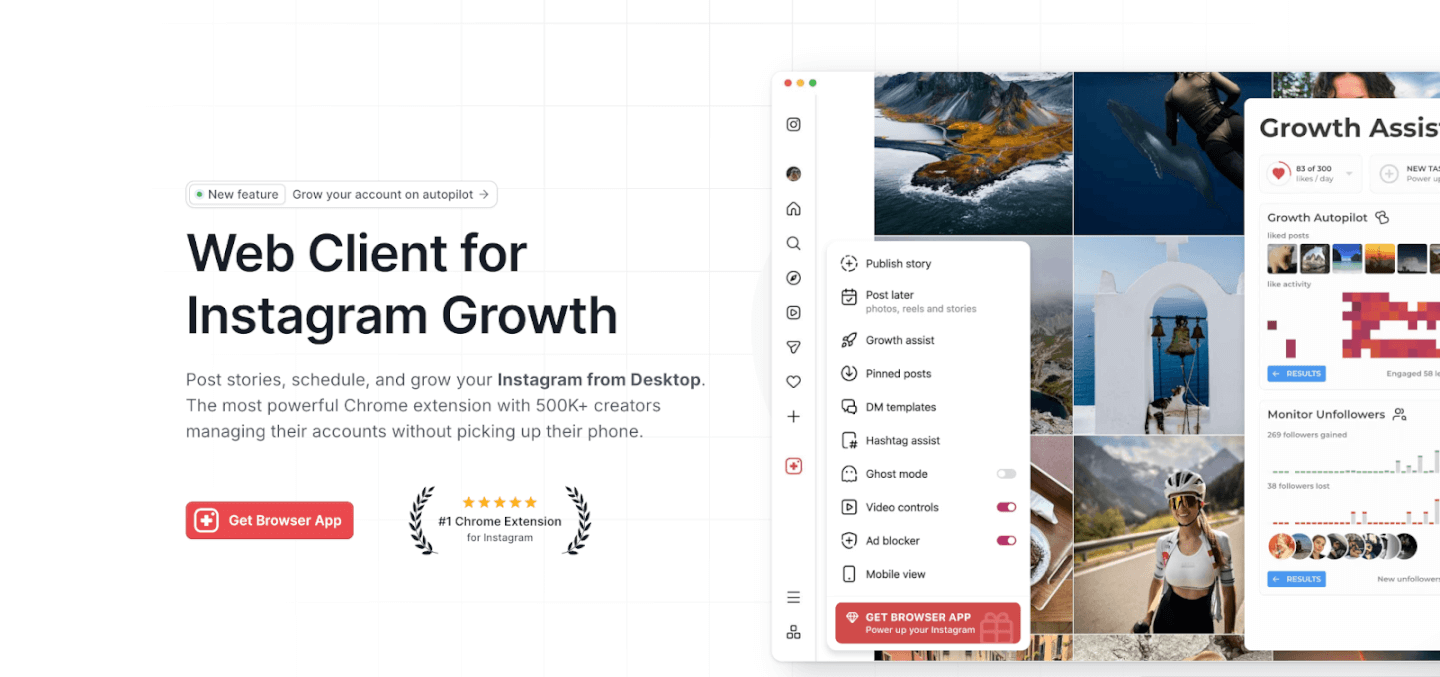
For those who want the ease of desktop scheduling without diving into Business Suite, another workaround is using a browser extension that emulates the Instagram mobile app. Tools like Inssist (a popular Google Chrome extension) let you post to Instagram from your computer by mimicking the mobile interface. Essentially, you install the extension, log in to Instagram through it, and you’ll see your Instagram feed and profile as if you were on a phone – but on your desktop screen.
How an extension like Inssist works: After logging in via the extension, you can click the + button (just like in the app) to create a new post. Choose a photo or video file from your computer to upload, add your caption/hashtags, and then either publish immediately or (with certain extensions) schedule the post for later. Inssist, for example, offers scheduling functionality in its Pro (paid) version – you pick a date and time just as you would in the app, and the extension will post for you at that time.
Pros: The big advantage here is convenience for those who have content on their computer and want a quick way to push it to Instagram. You don’t have to transfer photos to your phone or use the clunky web publisher. Extensions like this are often lightweight and user-friendly, closely mirroring the Instagram experience. They can handle feed posts, carousels, and even Reels/Stories in some cases, all from desktop. This is great for creators who edit photos on a PC or brands with a library of product shots on their computer.
Cons: The main drawback is that these extensions are third-party tools not officially sanctioned by Instagram. While many people use them without issue, there’s a slight risk in granting a third-party access to your account. They may also have limitations – for example, Inssist’s free version allows direct posting but requires an upgrade to schedule posts in advance, and some features can be buggy (users have reported occasional quirks when scheduling Reels, for instance). Additionally, you won’t get advanced analytics or content suggestions; it’s essentially just a posting tool. Use such extensions at your own discretion, and always keep your account’s security in mind (enable 2FA, etc.). For a simple scheduling need, though, they can be a handy alternative.
4. Save Posts as Drafts and Set Reminders (The “Manual” Scheduler)
Not ready to commit to any scheduling app? You can still avoid last-minute posting chaos by using the Drafts + Reminder method. This approach isn’t a true auto-scheduler, but it’s an effective free hack for staying on schedule:
- Prepare Drafts: Anytime you have a bit of free time, create an Instagram post as if you were about to publish – add your photo or video, write the caption, tag products or people, etc. Instead of posting, save it as a Draft (on the final edit screen, hit the back arrow and Instagram will prompt “Save Draft”). The post will be stored in your account under the Drafts section. You can do this for multiple upcoming posts so they’re ready to go.
- Set a Reminder: Use your phone’s calendar or a reminder app (Google Calendar, Apple Reminders, etc.) to schedule an alert at the desired posting time. For example, if you want to post tomorrow at 6 PM, set a notification for that time. When it goes off, you simply open Instagram, go to your Drafts, and publish the prepared post. All the content is pre-loaded, taking less than a minute to actually post.
This method gives you partial automation: the content creation is done ahead of time, and a nudge ensures you don’t forget to publish. It’s especially useful if you like to double-check things right before posting (you maintain the flexibility to tweak the caption or swap an image last second). It’s also completely free and doesn’t require giving access to any third-party service.
However, remember that it’s not fully automatic – if you ignore the reminder, the post won’t go up. There’s still an element of manual action needed, which means you have to be disciplined. The Drafts + Reminder strategy works best for individuals or small teams who want flexibility and control, but still need a bit of structure to remain consistent. It can be a good starting point before you invest in more sophisticated scheduling tools.
5. Use a Social Media Scheduling Tool (Professional Platforms)
When you’re managing a robust content calendar or multiple social channels, dedicated scheduling platforms can be a lifesaver. There are many popular social media management tools out there (both free and paid) that allow Instagram scheduling along with extra features like analytics, team collaboration, and content curation. In 2026, some of the top-rated Instagram schedulers include Later, Hootsuite, Metricool, Buffer, and Sprout Social – each with its own strengths.
These tools typically work via a web dashboard or mobile app: you connect your Instagram account, upload or design your posts within the platform, set your captions/hashtags, then choose your schedule times. The tool will automatically post to Instagram for you (many can handle not just standard posts, but also Reels, Stories, or even the first comment for hashtags). Beyond scheduling, they often come with content calendars, best-time-to-post recommendations, and libraries for storing your media and captions.
To help you compare, here’s a quick overview of some of the best Instagram scheduling tools and what they offer:
ToolDescription & Key FeaturesBest ForLaterVisually-oriented planner with a drag-and-drop calendar and feed preview. Suggests optimal posting times and offers a link-in-bio tool. Has a free plan (with limited posts).Creators and small brands focused on Instagram aesthetics (planning a beautiful grid).HootsuiteAll-in-one social media management platform supporting Instagram, Facebook, Twitter, TikTok, and more. Allows bulk scheduling, advanced analytics, and team collaboration features (e.g. content approval workflows).Agencies and businesses managing multiple accounts who need robust features and multi-platform control.MetricoolComprehensive scheduler with unified analytics. Provides data-driven insights like optimal post times based on follower activity, competitor tracking, and the ability to manage ads as well.Marketers who want in-depth analytics and to track performance across several social platforms (great for those running multi-brand or multi-platform campaigns).BufferSimple, clean scheduling tool with an easy-to-use interface. Supports features like hashtag group saving and first-comment scheduling for Instagram. Also includes basic analytics and an AI assistant for captions. Offers a generous free plan.Individuals or small teams seeking a straightforward, budget-friendly scheduling solution.Sprout SocialPremium social media management suite with powerful scheduling, monitoring, and reporting capabilities. Supports scheduling for posts and Reels, plus social listening and CRM integration. Offers detailed reports and team workflows (assigning tasks, approval processes).Larger e-commerce brands or marketing teams that need comprehensive social media oversight and are willing to invest in advanced tools.
Each of these platforms can help streamline your Instagram marketing. For instance, Later’s best-time suggestions can take the guesswork out of scheduling, while Hootsuite and Sprout Social let you coordinate Instagram with all your other social channels in one place. Many offer free trials or plans – it’s worth testing one or two to see which interface and features you prefer. Keep in mind, though, that advanced capabilities (like managing many accounts or accessing deep analytics) often come with subscription costs. Choose a tool that matches your scale: you don’t want to overpay for features you won’t use, but you also want something that can grow with your needs.
Pro Tips for Effective Instagram Scheduling
Simply queuing up posts is a great start, but to really get results you should apply some strategy to your scheduling. Here are some best practices and tips to make the most of your Instagram content plan:
- Know Your Peak Times: Schedule posts when your audience is most active on Instagram. Use Instagram Insights (or your scheduler’s analytics) to identify when engagement tends to spike – for example, if your followers tend to be online around 7–9 PM, schedule your posts a little before that window. Posting at peak times means your content hits feeds when users are scrolling, which boosts the chances of likes and comments. (Remember, Instagram’s algorithm favors content that gets quick engagement, so timing can influence reach!). Over time, you can refine these slots by watching which scheduled posts perform best.
- Write Engagement-Driven Captions: Don’t “set and forget” basic captions in your scheduled posts – make them count. Even though you’re automating the posting, you should craft captions that spark interaction. Ask questions, encourage feedback, or invite users to tag a friend. For example, an Amazon seller might post, “What’s one feature you wish more kitchen gadgets had? Tell us below 👇”. Compelling captions can lead to more comments and shares, which will improve your post’s performance in the algorithm. UGC can play a role here too: if you’re sharing a customer’s photo or a micro-influencer’s video, introduce it with a personal story or quote to humanize your content. The more your scheduled posts feel like a conversation, the better they’ll engage your audience.
- Batch Create Content: Efficiency is key for a small business. Try dedicating a block of time each week or month to content creation, then schedule all those posts in one go. Marketers find that batch-creating several posts in one sitting is far more efficient than creating and posting day by day. When you’re in “creative mode,” you can knock out multiple captions and edits faster, and scheduling them ensures they roll out steadily over time. Batching also helps you maintain a consistent style and theme, since you’re planning content holistically. Many content creators use this approach to manage a steady flow of Instagram, TikTok, and blog content without burning out.
- Stay Flexible and Be Ready to Adjust: While scheduling provides structure, don’t become so rigid that you miss out on spontaneity or necessary changes. The social media landscape moves fast – trending topics, viral challenges, or unexpected news can crop up any day. Be prepared to reschedule or swap out posts if needed to keep your content timely. For example, if you had a product post scheduled but a relevant industry meme is trending that day, you might postpone the product post and jump on the trend (if it fits your brand voice). Most scheduling tools allow easy drag-and-drop changes or quick rescheduling. And if you realize a certain time slot isn’t performing well, adjust your future schedule accordingly. The goal is to have a plan but remain agile.
- Monitor Performance & Use Analytics: Don’t “set it and forget it” entirely – regularly review how your scheduled posts are doing. Keep an eye on Instagram Insights or your scheduler’s analytics dashboard to track metrics like engagement rate, reach, clicks (if applicable), and follower growth. Identify patterns: perhaps your video posts on Tuesday evenings get the most saves, or maybe posts with UGC photos get more comments. Use these insights to refine your content strategy. For instance, if you see that Reels posted at 5 PM outperform static images at noon, adjust your calendar to include more 5 PM Reel slots. Over time, data-driven scheduling will improve your results. It’s like fine-tuning the engine of your Instagram marketing – analytics tell you what’s working so you can do more of it.
- Leverage Micro-Influencers and UGC: Finally, remember that content is king – and you don’t have to create it all alone. Some of the most engaging posts can come from your customers or influencer partners. Incorporate these into your schedule to add social proof and variety. For example, if you run an e-commerce brand, plan a “#FanFriday” each week where you share a customer’s photo using your product, or schedule an influencer’s review video as a mid-week post. Not only does this lighten your content creation load, it also builds community. Micro-influencers (those niche creators with dedicated followings) often have very high engagement rates and authentic style, which can rub off on your brand when you share or repost their content. According to studies, people trust content from real users much more than polished brand ads – so a healthy dose of UGC in your scheduled lineup can boost credibility. Just be sure to credit creators properly and maybe add your own comment or context in the caption. By planning these collaborations and UGC posts in advance, you ensure they fit naturally into your feed and marketing campaigns (for example, timing an influencer’s post to coincide with your product launch or seasonal promotion).
By following these tips, you’ll transform scheduling from a mechanical task into a strategic advantage. You’ll be posting the right content at the right times, interacting with your audience meaningfully, and continually improving based on feedback and data. The result: a vibrant Instagram presence that runs like clockwork and delivers real value for your business.
Conclusion to How to Schedule Instagram Posts
Mastering how to schedule Instagram posts in 2026 can be a game-changer for any e-commerce brand or Amazon seller looking to scale up their marketing. Instead of frantically posting whenever you remember (or not posting for days when life gets busy), you’ll have a consistent content engine working for you. By using the methods and tools we discussed – whether it’s Instagram’s built-in scheduler or a robust platform like Hootsuite – you can maintain a steady drumbeat of content that keeps your audience engaged and your brand relevant.
The biggest payoff of smart scheduling is that it frees you to focus on big-picture growth. While your Instagram posts go live on autopilot, you can be fulfilling orders, refining your product line, or interacting with customers in comments and DMs. You’re essentially cloning your efforts: your social media is active even when you’re attending to other business needs. And because you’re planning ahead, you can align your Instagram content with promotions, use more micro-influencer collaborations, and ensure every post serves a purpose in your marketing strategy.
In today’s competitive landscape, working smarter beats working harder. Scheduling your Instagram posts is working smarter. It ensures you show up consistently for your followers, leverage data for timing and content decisions, and incorporate authentic UGC and influencer content seamlessly. All of this translates to stronger engagement, a growing follower base, and ultimately more traffic and sales for your online store.
So, if you haven’t started yet, now is the time. Plan out your next week of posts, schedule them, and see how much lighter your workload feels – all while your Instagram presence stays on-point. By embracing these scheduling strategies, you’ll not only save time but also set the stage for sustainable social media growth. Ready to elevate your Instagram marketing? Get started with scheduling today, and watch your engagement (and ROI) climb. Your future self – and your thriving e-commerce brand – will thank you!