




Influencer marketing is booming – the industry is projected to exceed $24 billion globally by 2026. For e-commerce entrepreneurs and Amazon sellers, partnering with content creators and micro-influencers can drive authentic user-generated content (UGC), reviews, and sales. But how much do influencer marketing platforms cost, and which pricing model makes sense for your brand? Pricing can range from under $100 per month on self-serve platforms to enterprise plans costing tens of thousands. In this guide, we’ll break down influencer marketing platform pricing in 2026 – highlighting actual platforms, what they charge, and why their strategies work for brands. By the end, you’ll know which type of platform (from pay-per-post networks to all-in-one SaaS tools) fits your budget and goals.
Understanding Influencer Marketing Platform Pricing Models
Not all platforms charge the same way. It’s important to understand the common pricing models before comparing providers:
- Monthly SaaS Subscription: Many influencer platforms (like Upfluence or Grin) charge a monthly or annual software license fee. These typically range from a few hundred to a few thousand dollars per month, often with annual contracts. In return, brands get access to a database of influencers and campaign management tools. This model is best for companies planning continuous campaigns and able to invest in an in-house team.
- Pay-Per-Campaign or Pay-Per-Post: Some newer platforms use performance-based pricing. For example, Stack Influence charges a flat fee per successful influencer post (around $39 per promotion to start). You pay only when an influencer delivers content, which aligns costs directly with results. This can be budget-friendly for smaller brands, since you’re not paying big upfront fees – you “only pay when an influencer completes a social post”.
- Marketplace Commission or Tiered Plans: Affordable marketplaces (like Intellifluence or Social Cat) often have tiered plans starting low (under $100/month) for basic access, and higher tiers for more campaigns or features. They may function as marketplaces where you post offers and creators apply, keeping costs predictable. Some also allow free product gifting as compensation, which is attractive for brands on a tight budget (in fact, 83% of creators are willing to work on product-only campaigns if they love the brand).
Now, let’s compare top influencer marketing platforms – their pricing breakdowns and why their strategies succeed. (For clarity, “$/month” refers to monthly subscription fees, while other models are noted.)
1. Stack Influence
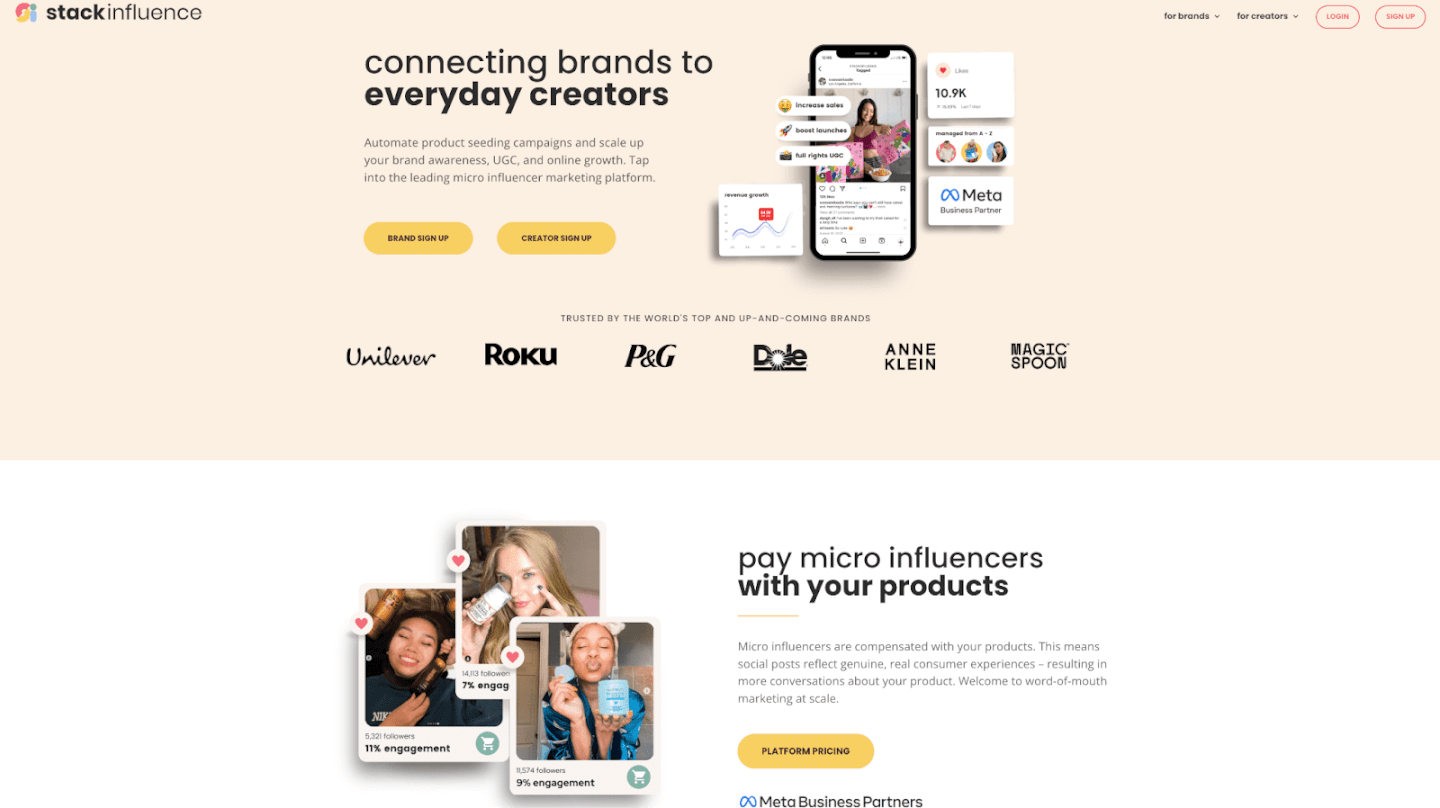
Price: Stack Influence has a unique performance-based pricing model: $39 per successful micro-influencer post (with volume discounts as you scale). There are no upfront SaaS fees – you pay only when an influencer delivers a post, aligning costs directly with results. Brands also cover product costs to gift to influencers (the platform handles reimbursing influencers for the product once they post). If an influencer doesn’t end up posting, you aren’t charged for that promotion. This flexible, pay-as-you-go approach means even small e-commerce brands can run campaigns without large contracts.
Why it works: Stack Influence’s strategy centers on micro-influencers and authentic product seeding. By compensating creators with free products, the content feels like genuine word-of-mouth – posts reflect real consumer experiences, not high-paid endorsements. This drives higher engagement and trust. The platform is fully managed, automating outreach, tracking, and UGC collection for campaigns “from A to Z”. For a busy Amazon seller or DTC founder, that means less hands-on work. Stack Influence’s focus on everyday “nano” and micro creators can yield excellent ROI: their audiences are small but highly engaged, and brands get a library of user-generated content (UGC) to repurpose in ads, social media, and product pages. Overall, Stack Influence’s pay-per-post model minimizes risk – you’re essentially buying outcomes (social posts and content), not just software access. This model is especially appealing in 2026 as many creators (over 80%) are open to product-only deals, letting brands obtain authentic influencer content cost-effectively.
2. Upfluence
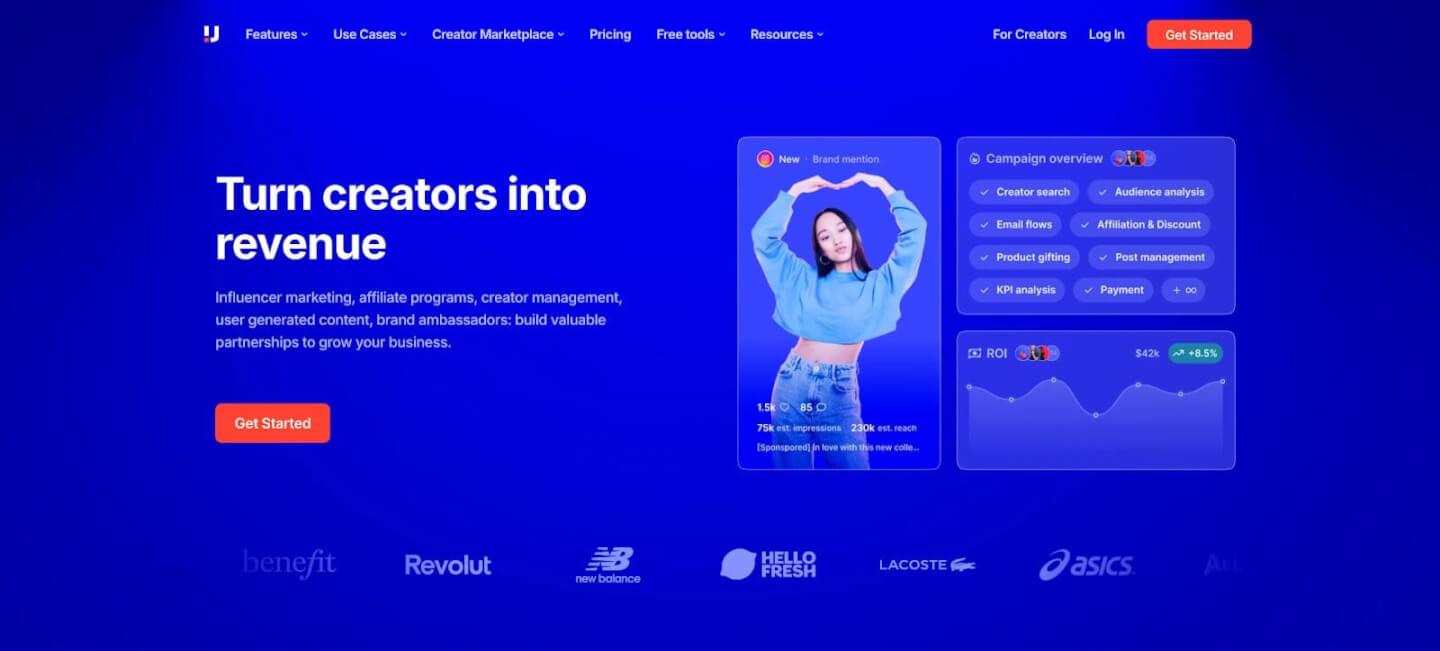
Price: Upfluence is a well-known SaaS platform with robust features. Its plans typically range from $2,000 to $3,500+ per month (often with an annual contract). In other words, brands should expect around five figures per year for Upfluence. (Exact pricing is custom – one user reported ~$3,000/month for a full suite, and a basic package can start lower, but generally it’s a sizable investment for the full capabilities.) Upfluence does not include influencer fees – the subscription gives you access to their software and massive influencer database; you still negotiate or compensate influencers separately.
Why it works: Upfluence’s strategy is to empower brands with a comprehensive in-house tool. It boasts access to over 12 million influencer profiles and advanced search filters to pinpoint creators by niche, audience demographics, and engagement. Brands love features like the Chrome extension that lets you analyze influencers directly on Instagram/YouTube, plus deep e-commerce integrations. For example, Upfluence’s Shopify app can automatically identify influencers among your customers, sync sales data, and track influencer-driven revenue. This makes it ideal for online stores and Amazon sellers who want to measure ROI from influencer campaigns in terms of actual sales. Upfluence also includes an influencer relationship management (CRM) system and bulk email outreach tools, which help larger teams manage hundreds of influencer partnerships efficiently. In short, Upfluence’s high pricing is justified for mid-size to large brands or agencies that need robust analytics and scalability. Its strategy works by streamlining large-scale campaigns – when you’re juggling dozens of influencers, a platform like Upfluence saves time and provides data to optimize performance. Just note that it’s a tool-only (no “done-for-you” services), so there is a learning curve and you’ll need internal resources to fully leverage it.
3. Aspire (formerly AspireIQ)
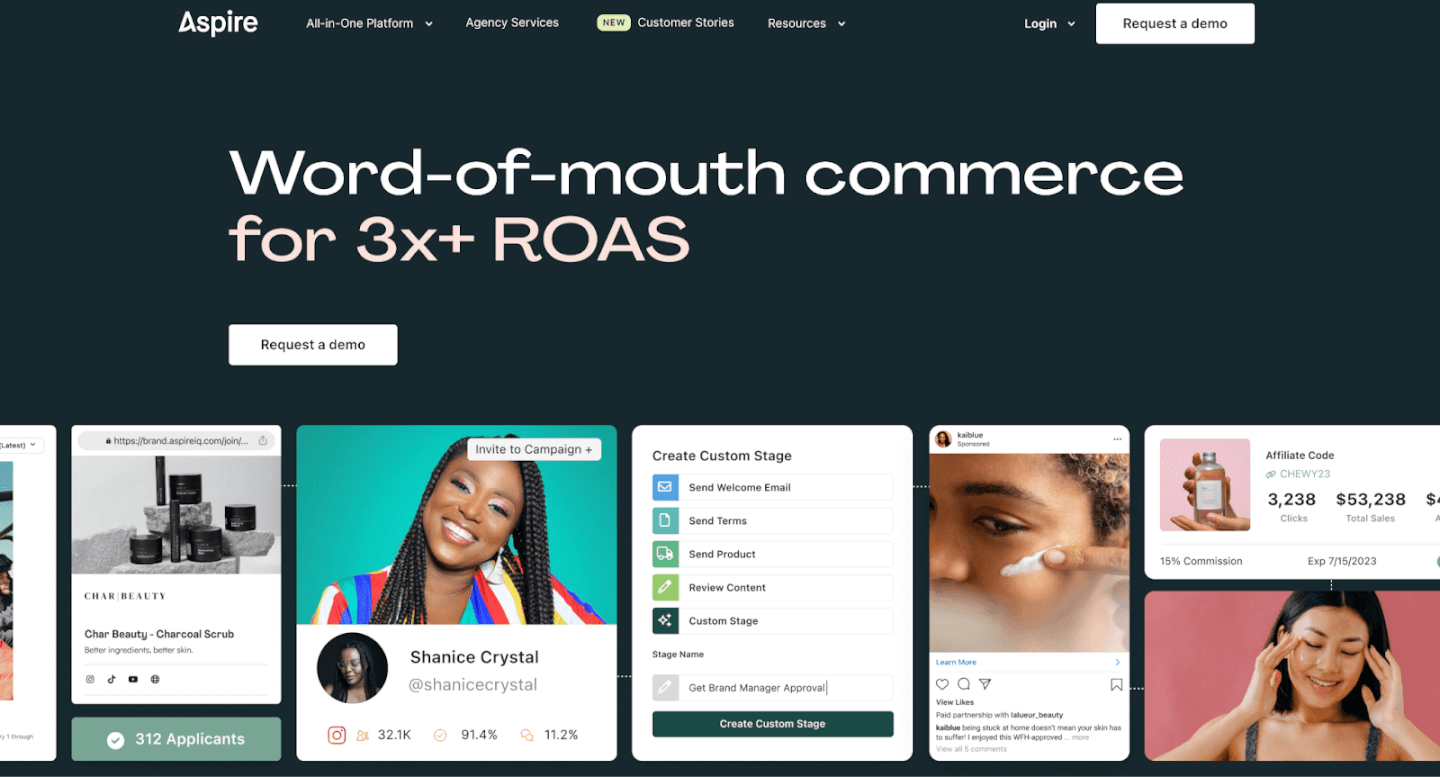
Price: Aspire’s pricing starts around $2,000 per month (annual contract required) for brands. This base allows access to their influencer search, outreach, and campaign management features. Pricing can increase for higher tiers or additional modules (for example, adding advanced integrations or managed services). Aspire is in a similar price bracket to Upfluence and Grin – geared toward serious DTC brands investing in influencer programs.
Why it works: Aspire stands out by helping brands build long-term creator communities. It’s often praised as the best platform for Shopify stores, DTC brands, and even Amazon sellers. The dashboard is user-friendly and covers the full workflow: from discovering influencers and sending product gifts, to collaborating on content and tracking sales. Aspire has strong features for content collaboration and UGC collection – for instance, you can organize all the photos and videos influencers create for easy reuse in your ads or social media. Its optional Shopify integration lets you track when influencer-driven visitors make purchases, tying influencers to actual revenue. Aspire also supports affiliate programs (discount codes, referral links), which aligns with a trend: more brands are blending affiliate marketing with influencer marketing for performance-based rewards. This strategy works well because it encourages creators to act as true brand ambassadors, not one-off promoters. By focusing on long-term relationships and providing the CRM tools to manage them, Aspire helps brands generate ongoing UGC and repeat promotions. For example, brands can turn their best influencers into affiliates or ambassadors, driving 71% more affiliate revenue year-over-year in influencer programs. Overall, Aspire’s slightly pricey platform pays off if you aim to nurture a community of creators who consistently post about your products (which often delivers the highest ROI in influencer marketing).
4. Grin
Price: Grin is a premium all-in-one platform. It doesn’t publicly list prices, but quotes typically start around $2,500 per month, with an annual commitmentinfluencer-hero.com. There are no pay-as-you-go options – you sign a yearly contract, and free trials aren’t offered. In practice, that means at least $30,000+ per year for most Grin clients (and costs can rise for larger influencer limits or additional modules). This high-end pricing squarely targets medium to large e-commerce businesses that are ready to invest heavily in influencer marketing.
Why it works: Grin’s strategy is to be a one-stop platform to run influencer programs at scale. For brands with significant needs, Grin can replace a whole suite of tools. It integrates directly with e-commerce platforms (Shopify, WooCommerce, Magento, etc.) so you can manage product seeding and fulfillment within the app. For example, you can generate unique discount codes for each influencer and track sales they drive, or even ship products to influencers and track delivery – all through Grin. It also features a content library for user-generated content (UGC), storing all the posts influencers create so your team can easily repurpose that content across marketing channels. Additionally, Grin supports affiliate tracking and payments, managing influencer commission payouts for sales – crucial for performance-based campaigns. Essentially, Grin centralizes every aspect: influencer discovery (though this is one of its weaker points), outreach and email integration, contracts, posting schedules, product shipment, link tracking, sales attribution, and even payments to creators. This end-to-end capability means large brands can scale up to hundreds of influencers without the process breaking down. The ROI of Grin comes from efficiency and control: it automates repetitive workflows (like generating trackable links, or updating you on each influencer’s posting status) so that a small team can manage a big ambassador program. Brands that succeed with Grin often have many micro-influencers posting regularly, creating a steady stream of UGC and sales. Grin’s approach works for those who want to own their influencer relationships in-house and integrate influencer marketing deeply with e-commerce operations (for example, syncing influencer campaigns with Shopify orders and inventory). Just be prepared to invest the time and money – Grin’s comprehensive features come with complexity, and its high cost and annual lock-in may be prohibitive for smaller businesses.
5. CreatorIQ
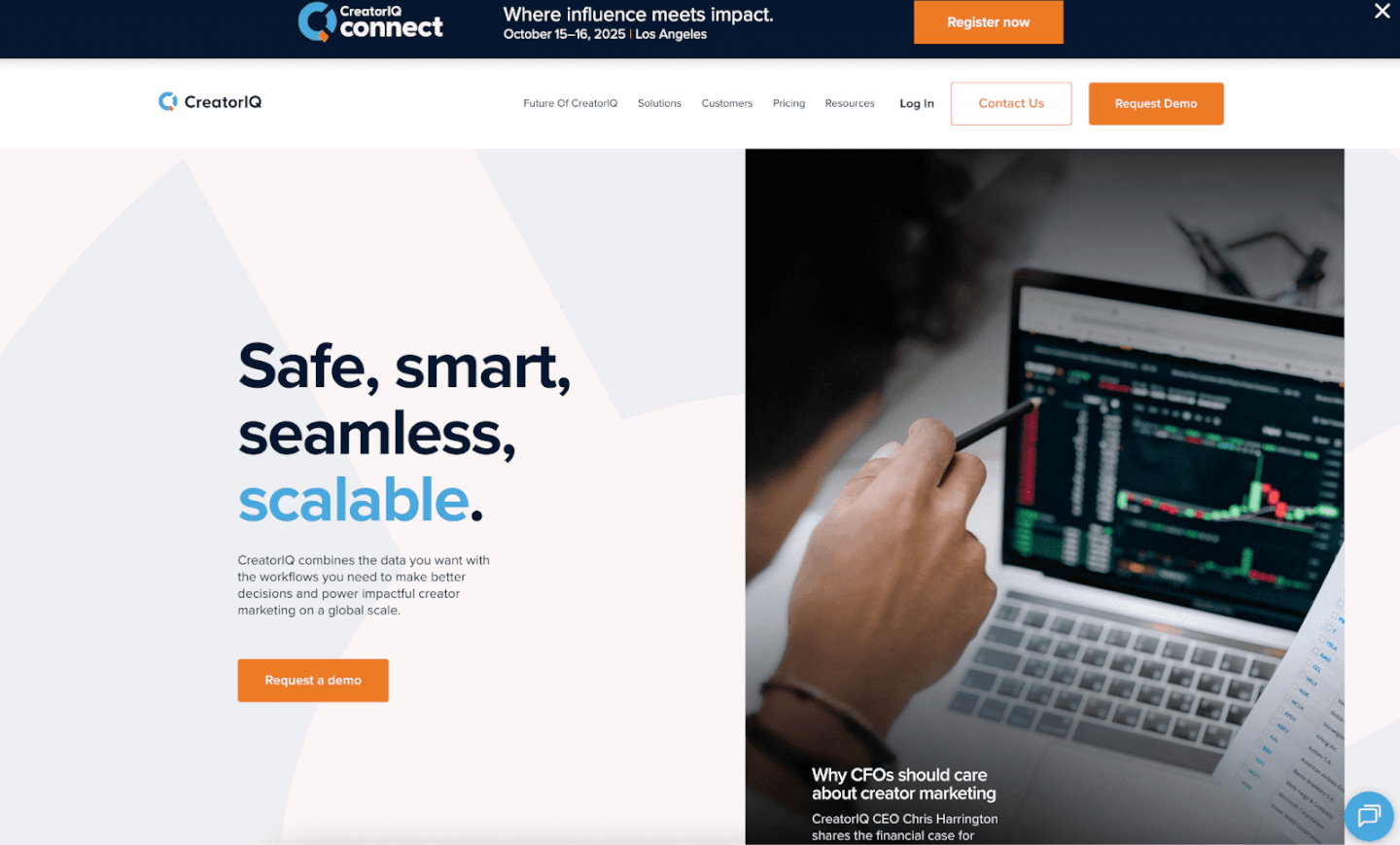
Price: CreatorIQ is positioned for enterprise clients, with pricing roughly in the $2,500 to $5,000+ per month range. Like Grin, it requires an annual contract and custom pricing based on your needs (number of users, influencers, etc.). Large global brands could pay well above $60,000 per year for CreatorIQ, especially if they utilize custom integrations and additional modules. This platform is generally out of budget for small or midsize businesses and aimed at Fortune 500 or companies with advanced influencer programs. (For perspective, another enterprise tool Traackr has packages starting at $32,500 per year for 5 users, which shows how enterprise pricing can reach tens of thousands annually).
Why it works: CreatorIQ’s strategy is to deliver top-notch data, AI insights, and integration at scale – everything an enterprise team would need. It offers one of the most powerful analytics dashboards in the industry, with the ability to track fine-grained performance metrics, compute influencer campaign ROI, and even detect fake followers or fraudulent engagement through advanced algorithms. Security and compliance are also key: enterprise clients appreciate features like audit trails, customizable user roles/permissions, and compliance monitoring (for FTC disclosure, brand safety, etc.). CreatorIQ supports API integrations with other enterprise systems (CRM, attribution tools, etc.), allowing influencer data to flow into your broader marketing stack. The platform’s AI-powered discovery engine helps identify influencers that perfectly match your brand criteria, which is vital when you’re running global campaigns and need precision. Why does this matter for ROI? Because large brands often care about quality over quantity – avoiding the wrong influencers (e.g., those with fake engagement) can save millions in wasted spend. CreatorIQ’s clients often run complex campaigns across multiple countries and social networks, and this platform excels at handling that complexity. It’s highly customizable and scalable; for instance, a company can tailor the reporting to their specific KPIs or integrate with internal data warehouses. The result is a platform that can prove the value of influencer marketing to C-level executives by showing clear data on impressions, engagement, clicks, and conversions attributed to each influencer. CreatorIQ’s strategy works for enterprises because it provides confidence and control – something needed at that level of investment. However, for a typical e-commerce SMB or Amazon seller, a tool like this would likely be overkill (and cost-prohibitive). Those brands might get more value from a mid-tier or performance-based platform instead.
6. Influencity

Price: Influencity is a platform known for its analytics, offered in tiered plans to accommodate different budgets. Plans start around $168 per month for a basic package, and go up to $500–$800+ per month for more advanced or unlimited usage. (Current listings show a Professional plan ~$318/mo and Business around $798/mo when billed annually.) There’s also an enterprise option for larger clients. Importantly, Influencity often allows month-to-month subscriptions and even free trials, which gives growing brands some flexibility to try it out. This means you could spend just a few hundred dollars in a given month to run a campaign and pause if needed.
Why it works: Influencity’s approach is all about data-driven influencer selection and campaign optimization. The platform claims an enormous database (200+ million social profiles) with deep audience filters. Brands can analyze potential creators’ followers in detail – ensuring you pick genuine influencers and avoid those with fake followers or misaligned audiences. For marketers who “love data,” Influencity provides metrics like audience demographics, engagement rates, influencer authenticity scores, and even predictive analytics to forecast campaign results. This strategy is effective because it brings performance marketing rigor into influencer marketing. Rather than just hunting for popular creators, you can use Influencity to find the right micro-influencers who have real influence over your target niche. The platform’s reporting dashboard then tracks your campaign reach, impressions, and engagement, helping you optimize content or switch out underperforming influencers. Another big plus is that Influencity’s pricing is relatively accessible – even smaller agencies or brands can start with the basic plan and scale up if they see success. By lowering the entry cost (compared to enterprise tools), it enables more brands to tap into influencer marketing in a measurable way. In sum, Influencity’s strategy of “better data for better influencer campaigns” works by increasing campaign efficiency. When you can identify high-fit, high-engagement creators and measure results, you’re more likely to achieve a strong ROI (and justify whatever you’re spending on the software). It’s a solid choice for data-savvy teams and any e-commerce brand that wants to ensure their influencer spend is optimized.
7. Intellifluence

Price: Intellifluence markets itself as an affordable influencer marketplace for everyone. It offers a free plan (very limited), and paid plans ranging from $99/month (Starter) up to $599/month (Advanced). The popular Regular tier is $249/month, which unlocks managing more campaigns and influencers. Notably, these subscriptions are month-to-month with no long-term contract – you can cancel or upgrade as needed. Even the top $599 plan is far cheaper than most enterprise platforms, making Intellifluence one of the lowest-cost options to run influencer campaigns. On top of the subscription, you may pay influencers a fee per post (especially for cash collaborations), but many micro-influencers on Intellifluence are open to product-only or small payments.
Why it works: Intellifluence’s strategy is to be a “small-business-friendly” marketplace, simplifying influencer marketing so anyone can do it. Brands can post a campaign offer, and interested influencers from Intellifluence’s network (over 90,000 registered creators) can apply to collaborate. This flips the typical outreach script – instead of spending hours emailing influencers, a small brand can let the creators come to them. The platform provides basic campaign workflow tools (brief creation, messaging, content submission) and importantly, it has options to facilitate product reviews. Intellifluence uniquely supports campaigns where influencers review your product on platforms like Amazon (and even on their own blogs or YouTube). For Amazon sellers, this can be a game-changer: you can recruit micro-influencers to try your product (often just for the cost of the product) and share an honest review or social post, boosting your product’s visibility and credibility. This focus on product/UGC reviews is a smart strategy – it directly drives social proof, which is valuable on marketplaces like Amazon. While Intellifluence doesn’t have the advanced analytics of pricier platforms (it’s fairly light on data metrics), it succeeds by keeping influencer marketing very accessible. A solo entrepreneur can run a campaign without needing an agency or a big budget. The low starting cost and ease of use means more brands can dip their toes into influencer marketing. This broad appeal has allowed Intellifluence to grow its network, which in turn attracts more brands – a virtuous cycle for a marketplace. In essence, Intellifluence works because it’s low-risk and straightforward: you pay a modest fee, list what you need (e.g. “looking for 10 micro-influencers to post an Instagram photo of our product in exchange for the product + $20 each”), and manage the responses in one dashboard. For many small e-commerce brands, that beats trying to cold-contact creators on Instagram. It’s truly “influencer marketing for everyone,” and while you shouldn’t expect concierge service or fancy AI, it delivers on enabling micro-influencer campaigns at scale for very little cost.
8. Social Cat

Price: Social Cat is another platform tailored to small brands, especially those interested in gifted (product-only) collaborations. Its plans start at $49/month (Start-Up), which gives about 10 micro-influencer matches monthly. The Growth plan is $99/month for up to 25 matches, and higher-tier plans go up to a few hundred dollars for more volume. Crucially, Social Cat offers a 7-day free trial – a zero-commitment way for brands to try it out. You can cancel before paying if it doesn’t meet your needs. This low entry price and trial make Social Cat one of the most accessible platforms for new or cash-strapped businesses.
Why it works: Social Cat’s strategy addresses a major pain point for small businesses: finding and contacting willing micro-influencers. The platform acts as a matchmaker – you create a brand profile and campaign, and Social Cat’s algorithm exposes it to vetted micro-influencers who then send collaboration requests if interested. All influencers on Social Cat are pre-screened for authenticity and quality (the team checks their followers and engagement), which means brands get matched with real, relevant creators rather than having to wade through fake or inactive accounts. Social Cat is one of the few platforms that explicitly focuses on both gifted and paid collaborations with micro-influencers. Many small brands start with gifted deals (free product in exchange for a post) as a cost-effective way to generate UGC and social buzz. Social Cat makes this easy by highlighting creators who are open to product-for-post deals – you can literally filter or see if an influencer prefers gifted or paid, avoiding awkward negotiations. This strategy works wonders for UGC generation: brands can get authentic user-generated content at a fraction of the cost of traditional campaigns. For example, instead of paying $500 for a single professional photoshoot, a brand might spend $49 on Social Cat and send out 5 product units to micro-influencers, resulting in 5 different pieces of content and social posts in return. Additionally, Social Cat’s messaging and reporting tools help maintain accountability – if an influencer ghosts after receiving a product, the platform’s team can intervene and there’s a system to report no-shows. This gives small brands peace of mind that they won’t be easily taken advantage of. Finally, Social Cat’s focus on Instagram and TikTok micro-creators aligns with where many DTC brands want to grow their presence. By tapping into the TikTok and Insta micro-influencer scene, brands can reach younger, engaged audiences. In summary, Social Cat works by removing the friction for small brands to run micro-influencer campaigns: it finds the influencers for you, facilitates purely product-based deals, and keeps everything on track – all for a very low fee. It’s an excellent starter platform to gather UGC and initial buzz as an e-commerce brand.
Conclusion to Influencer Marketing Platform Pricing
Influencer marketing platforms come in all shapes and price points. As we’ve seen, influencer marketing platform pricing can range from under $100 a month on self-service tools up to $5k+ per month on enterprise software.
In 2026, one trend is clear: brands are prioritizing authenticity and efficiency. Working with micro-influencers and integrating influencer-generated content into broader marketing can dramatically boost engagement and trust. The right platform should help you do this at scale and within budget – whether that’s a flexible pay-per-post network like Stack Influence or a robust software suite like Aspire or Grin. The goal is to invest in a solution that amplifies your marketing efforts, turning influencers into a reliable growth channel rather than a one-off experiment.
Finally, remember that success isn’t just about picking a platform – it’s about how you use it. Whichever option you choose, maximize its value by nurturing relationships with creators, monitoring results closely, and feeding those influencer insights back into your business (for example, using UGC in your website and ads, or doubling down on creators who drive the best ROI). Influencer marketing thrives on authenticity and consistency, so choose a platform that enables you to build those long-term partnerships. With the comparisons and insights in this guide, you’re well-equipped to make an informed decision and take your influencer campaigns to the next level. Now go forth and turn content creators into your brand’s most powerful advocates!