
How Full-Funnel Influencer Marketing Drives Sales in 2025
16th
December, 2025
Influencer Marketing
Amazon Marketplace
Artificial Intelligence
TikTok Tips
In 2025, influencer marketing isn’t just about buzz – it’s a full-funnel strategy taking customers from first click to checkout. Micro influencers and content creators are guiding shoppers at every stage, providing authentic user-generated content (UGC) that builds trust and boosts conversions. It’s a game-changer for e-commerce brands and Amazon sellers. In this guide, we’ll explore Full-Funnel Influence: From Awareness to Conversion in 2025 – what it means, why it matters, and how to leverage it. By the end, you’ll see how a holistic influencer marketing approach can drive more traffic, engagement, and sales for your online business.
Why Full-Funnel Influence Matters in 2025

Influencers are no longer just top-of-funnel promoters – they’re now integral across the entire customer journey, from awareness through conversion. Brands are responding accordingly: 86% of marketers plan to maintain or increase their influencer budgets into 2025, recognizing that creators can deliver impact at every stage. The reason is simple – influencer content isn’t just generating likes; it’s driving real ROI. Nearly eight in ten consumers trust influencer recommendations, and 61% have made a purchase based on an influencer’s recommendation in the past six months. In other words, influencers aren’t just creating hype; they’re converting followers into customers.
Micro influencers (those with smaller but highly engaged followings) play a special role here. Their authentic, relatable style often resonates more deeply than macro-celebrities. In fact, consumers are 60% more likely to trust creators who feel relatable and authentic, and micro-level creators typically deliver 2.4–6.7× higher engagement rates than big-name influencers. This higher engagement and trust translate into greater influence over decisions – exactly what a full-funnel approach aims to harness. Instead of one-off influencer posts that fade, brands in 2025 are fostering ongoing creator partnerships that guide the audience from first discovery all the way to purchase and beyond.
Unlock the Power of Micro Influencers and Elevate your Brand Today!
Awareness Stage: Casting a Wide Net with Influencers
At the top of the funnel (Awareness), the goal is to put your brand on the radar of potential customers. Influencers excel at this. A well-chosen creator can introduce your product to tens of thousands of people who’d otherwise never encounter your brand. Whether it’s a TikTok unboxing, an Instagram reel, or a YouTube mention, influencer content at this stage is all about reach and first impressions.
Importantly, these impressions are highly effective for discovery. TikTok in particular has become a product discovery engine – as much as 78% of TikTok users say they’ve discovered products through influencer videos on the platform. And it’s not just TikTok: globally, 60% of consumers use influencer-curated posts or shopping pages to find new products. For e-commerce brands, this means influencer collaborations can cast a much wider net than your own ads or site alone.
Awareness tactics with influencers include:
-
- Sponsored social posts and videos: Have micro influencers create engaging posts (e.g. a catchy Instagram Reel or a “first look” TikTok video) showcasing your product in an authentic way. Their followers get introduced to your brand in a context that feels like friendly advice rather than an ad.
- Giveaways and contests: Partner with creators to host giveaways, which can rapidly boost brand visibility and follower count as audiences tag friends and share for a chance to win.
- Hashtag challenges or trends: Encourage influencers to start a trend (especially on TikTok) with a branded hashtag. This can spark viral awareness as users participate, creating a ripple effect of UGC.
- Influencer takeovers or shout-outs: Let a creator “take over” your brand’s social account for a day or do collaborative live streams. This cross-exposure brings their audience over to your brand channels, building your own following.
- Sponsored social posts and videos: Have micro influencers create engaging posts (e.g. a catchy Instagram Reel or a “first look” TikTok video) showcasing your product in an authentic way. Their followers get introduced to your brand in a context that feels like friendly advice rather than an ad.
Key metrics at this stage are reach, views, impressions, and engagement volume (likes, shares, comments). The focus is on brand awareness – making as many relevant people as possible aware of your product or store. For example, an Amazon seller launching a new product might send samples to 50 micro influencers on Instagram and TikTok. The resulting buzz (stories, unboxing videos, hashtag mentions) can drive a surge of traffic to the Amazon listing, kicking off the awareness wave that every new product needs.
Consideration Stage: Building Trust with Authentic Content
Awareness is only step one. After sparking interest, you need to nurture it. In the consideration stage, potential customers are evaluating your product, comparing alternatives, and deciding if they trust your brand. Here, influencers act as educators and trust-builders – turning initial curiosity into genuine interest. The key is authentic, informative content that speaks to the audience’s questions and pain points.
Creators are uniquely effective at this mid-funnel stage because of the trust they’ve earned with their followers. Globally, 79% of consumers say they trust influencer recommendations when considering a purchase. Often, these recommendations come in the form of longer-form or detailed content such as YouTube reviews, tutorial videos, blog posts, or Instagram Stories explaining the product in use. This is where micro influencers shine: their niche focus and personal tone make their advice feel like it’s coming from a friend. Indeed, surveys show consumers trust “people like me” far more than polished brand content – 84% of people trust peer recommendations over brand-produced ads.
Consideration-stage influencer tactics include:
-
- In-depth product reviews: A YouTube or Instagram TV review by a creator can highlight your product’s features, pros/cons, and how it fits into the influencer’s life. These reviews serve as third-party validation and often rank in search results (bonus for SEO, as many shoppers search “[Product] review”).
- How-to’s and tutorials: Influencers can create how-to videos or posts showing your product in action (e.g., a fitness micro influencer demonstrating a workout with your exercise gear, or a beauty creator doing a makeup tutorial with your cosmetics). This educates consumers on usage and benefits, addressing any uncertainties that might otherwise block a purchase.
- Comparisons and testimonials: Creators can compare your product to another or share honest testimonials (“I tried X for 30 days”). Their authenticity humanizes your brand. Such content builds credibility, especially if the influencer openly discusses both pros and cons – it comes across as genuine, which strengthens audience trust.
- Q&A sessions or live demos: Hosting an Instagram Live or TikTok Live where the influencer uses your product and answers audience questions in real-time can be powerful. It allows potential buyers to interact, voice concerns, and get immediate, unscripted answers from someone they trust.
- UGC and social proof: Encourage influencers to invite their followers to share their own experiences or content (for example, “Duet this video with your results” or a hashtag for fans). This user-generated content multiplies the social proof. Even outside the influencer’s own posts, your brand can repurpose these UGC snippets (with permission) on product pages or emails – seeing real people vouch for the product can tip fence-sitters toward buying.
- In-depth product reviews: A YouTube or Instagram TV review by a creator can highlight your product’s features, pros/cons, and how it fits into the influencer’s life. These reviews serve as third-party validation and often rank in search results (bonus for SEO, as many shoppers search “[Product] review”).
During consideration, engagement quality is a key metric. Look at comments (are people asking questions, tagging friends?), video watch time, saves, and click-throughs to your website or Amazon page. These indicate that viewers are not just seeing your product, but actively weighing it. For instance, if an influencer’s tutorial video leads to many swipe-ups or link clicks to “learn more” on your site, that’s a strong sign of interest generated.
Keep in mind that authenticity is the currency at this stage. Brands that allow creators creative freedom tend to get more sincere, compelling content. As one study noted, 60% of consumers are more likely to trust creators who seem relatable and honest about their experience. A micro influencer might mention a minor drawback of the product along with its benefits – that honesty can paradoxically increase trust, making their audience more confident that the recommendation is real and worth acting on.
Conversion Stage: Turning Influence into Sales
Now for the bottom of the funnel – the conversion stage, where the goal is to drive the audience to take action and buy. This is where influencer marketing efforts translate into measurable sales. By this stage, your target customer knows about your brand (thanks to awareness efforts) and trusts that your product is a good choice (thanks to consideration content). The final push is giving them a convenient, compelling reason to purchase now. Influencers can provide that push through timely calls-to-action, exclusive offers, and seamless shopping experiences.
Several trends in 2025 make converting with influencers more effective than ever:
-
- Shoppable content is everywhere: Social platforms have added native shopping features (Instagram Shops, TikTok Shop, YouTube product tags), enabling influencers to embed product links directly in their posts or streams. This reduces friction – a follower can go from inspiration to checkout in one tap. No wonder 74% of consumers find shopping through influencer links and content convenient.
- Influencer recommendations spur direct purchases: Studies confirm what many brands have learned anecdotally – influencer-driven traffic converts well. 61% of consumers have bought something based on an influencer’s recommendation, reflecting the power of trust built up over the earlier funnel stages. When a favorite creator says “This gadget solved my problem – and you can get a discount with my code,” fans listen and act.
- Trackable links and codes enable ROI measurement: Unlike the early days of influencer marketing, today’s campaigns can be tightly tracked. Brands are giving each influencer a unique promo code or affiliate link, so every sale they drive is attributed. For example, an Amazon seller can generate a specific Amazon Associates link for an influencer – every purchase through that link is recorded, and the influencer earns a small commission. This not only incentivizes the creator to drive conversions, but it also gives the brand clear data on how each influencer contributes to revenue. Advanced teams even integrate influencer links with their analytics or affiliate dashboards, measuring metrics like cost per acquisition (CPA) and return on ad spend (ROAS) per influencer. The bottom line: full-funnel influencer campaigns are performance marketing, not guesswork, by 2025.
- Shoppable content is everywhere: Social platforms have added native shopping features (Instagram Shops, TikTok Shop, YouTube product tags), enabling influencers to embed product links directly in their posts or streams. This reduces friction – a follower can go from inspiration to checkout in one tap. No wonder 74% of consumers find shopping through influencer links and content convenient.
Conversion-stage tactics to deploy with influencers:
-
- Exclusive discount codes: Provide influencers with a special promo code (e.g., INFLUENCER10 for 10% off) to share with their followers. This creates urgency (“limited time discount for my followers!”) and a clear reason to buy now. It also tracks purchases. Many Instagram and YouTube creators will mention the code in content and link it in bio or description.
- Affiliate partnerships: Set up influencers as affiliates who earn a commission for each sale. This is common for Amazon sellers via the Amazon Influencer Program – influencers might feature your product in a “Top Amazon Finds” video and include their affiliate link. It aligns incentives (the more they sell, the more both you and the creator earn) and turns influencers into a virtual sales force.
- Live shopping events: Leverage the rise of live commerce. For instance, do a live stream on Amazon Live or Instagram Live with an influencer demonstrating the product and answering questions, while viewers can click to buy in real-time. These events create a sense of interactive urgency (especially if paired with a one-day promo code). The format is like a modern QVC hosted by a person the audience already trusts.
- Retargeting with influencer content: Another conversion booster is whitelisting influencer content for paid ads. With permission, you can turn a creator’s high-performing post into a targeted ad (often called Spark Ads on TikTok or Branded Content Ads on Meta). This hybrid approach combines influencer authenticity with the reach of paid advertising. For example, if a micro influencer’s video review resonated well (lots of comments and clicks), run it as an ad to people who viewed the video or visited your site but haven’t purchased. This keeps the influencer’s voice in front of warm prospects and nudges them to convert. Brands employing this strategy have seen significantly higher click-through rates and lower customer acquisition costs compared to standard brand ads.
- Exclusive discount codes: Provide influencers with a special promo code (e.g., INFLUENCER10 for 10% off) to share with their followers. This creates urgency (“limited time discount for my followers!”) and a clear reason to buy now. It also tracks purchases. Many Instagram and YouTube creators will mention the code in content and link it in bio or description.
At the conversion stage, sales metrics take center stage: referral traffic that converts, number of orders using the influencer’s code/link, conversion rate, revenue generated, and CPA for influencer-driven customers. If you’re an e-commerce brand, you might track how many new customers each influencer brings in and how that compares to the cost of the campaign. The good news is that, when done right, influencer marketing can have a very attractive ROI. By treating creator content as a sales asset (boosting it, repurposing it, and tracking it), savvy brands turn influencer partnerships into a reliable revenue driver. In fact, companies that once viewed influencers only for awareness are now seeing them deliver “full-funnel” results – conversions included – and are doubling down on these strategies.
Advocacy and Loyalty: Beyond the Purchase (Turning Customers into Influencers)

Your most authentic influencers might actually be your happy customers. After a purchase, brands can encourage buyers to share their experience on social media, effectively turning them into micro influencers as well. This user-generated content amplifies positive reviews and fuels a virtuous cycle of trust. Remember, people trust people – 84% of consumers trust peer recommendations more than branded content. When new potential buyers see real customers posting about a product, it provides powerful social proof that reduces doubt and encourages them to join in.
Ways to cultivate advocacy and UGC include:
-
- Post-purchase follow-ups: Encourage customers to tag your brand or use a specific hashtag when they share product photos or videos. Many brands do this in a friendly way (e.g., a card in the package or an email saying “Share your unboxing moment with #MyBrandStory for a chance to be featured!”). This often prompts organic UGC creation.
- Brand ambassador programs: Identify customers or nano influencers (perhaps those who already love your product) and invite them into an ambassador program. Ambassadors might get small perks like early access, free swag, or commissions in exchange for regularly promoting the brand. These individuals often promote out of genuine enthusiasm, and their ongoing word-of-mouth can drive both new sales and repeat purchases.
- Feature customer content: Repost customer Instagram photos, tweet their testimonials, or create story highlights of customer reviews. Showing off UGC not only flatters your customers (building loyalty), but also provides authentic marketing content for your brand. For example, many Amazon sellers now include a section on their listings with photos or videos from real customers (through the Amazon Inspiration feature or related posts), which can increase conversion rates on the product detail page.
- Community building: Foster a community around your product, such as a private Facebook group, Discord server, or forum where fans and influencers interact. When people feel part of a brand community, they’re more likely to advocate it to others. You can invite influencers to moderate or participate, blending official influencer campaigns with organic community engagement.
- Post-purchase follow-ups: Encourage customers to tag your brand or use a specific hashtag when they share product photos or videos. Many brands do this in a friendly way (e.g., a card in the package or an email saying “Share your unboxing moment with #MyBrandStory for a chance to be featured!”). This often prompts organic UGC creation.
The impact of advocacy is measured in metrics like customer lifetime value, repeat purchase rate, and volume of referral traffic or content. It’s harder to quantify than early-funnel metrics, but extremely valuable – a strong cadre of brand advocates reduces your reliance on paid advertising over time. Essentially, loyal customers become micro influencers on your behalf, creating a sustainable loop of trust and referrals.
Putting It All Together: Full-Funnel Influencer Strategy Tips
We’ve broken down the stages of full-funnel influence; now it’s time to execute. Here are some best-practice tips for e-commerce brands and Amazon sellers to maximize influencer impact across the funnel:
-
- Map influencers to funnel stages: Analyze where your current marketing is weakest – do you need more awareness, or are plenty of people aware but not converting? Use influencers accordingly. For awareness, work with creators who have sizeable reach in your niche (e.g., a trending TikToker for a broad product launch). For consideration, tap micro influencers known for honest reviews or detailed tutorials. For conversion, lean on those with proven influence on purchase behavior (perhaps creators who are savvy with affiliate marketing or who have a history of driving follower action). By aligning the right influencer with the right funnel stage, you ensure the content and objectives are on target.
- Leverage multi-platform content: Today’s content creators are often present on multiple platforms – and so are your customers. Repurpose and redistribute influencer content across channels. For example, a product demo video from YouTube can be clipped into shorter TikToks or Instagram Stories. An influencer’s high-performing Instagram photo can be featured in your email newsletter. This cross-channel approach reinforces the message at different touchpoints and extends the life of influencer content. It ensures that the influence doesn’t remain in a silo – instead, it’s integrated with your ads, emails, website, and even in-store displays for a unified campaign.
- Focus on quality and authenticity, not just follower count: When selecting influencers, remember that bigger isn’t always better. An influencer’s genuine connection with their audience often matters more than sheer reach. Micro influencers, in particular, drive higher engagement and conversions due to deeper trust (their followers truly value their opinions). A small army of micro influencers can often outperform a single mega celeb endorsement, both in cost and in content diversity. Plus, micro influencers are typically more flexible and open to creative collaborations – meaning you can get a variety of UGC (photos, videos, stories) to use in your marketing.
- Use data to continually optimize: Treat full-funnel influencer campaigns as you would any performance marketing channel – track results and iterate. Monitor which influencer posts led to the most site traffic, which discount codes got used the most, which videos drove higher add-to-cart rates, etc. If one creator’s content is excelling, amplify it (as discussed, through whitelisting or ad boosting). If another isn’t delivering, adjust your approach or try a different creator. By focusing on metrics like click-through rates, conversion rates, and cost per acquisition, you can refine your influencer strategy for maximum ROI. The brands winning in 2025 are those that lean on data-driven insights rather than gut feeling – they double down on what works and drop what doesn’t.
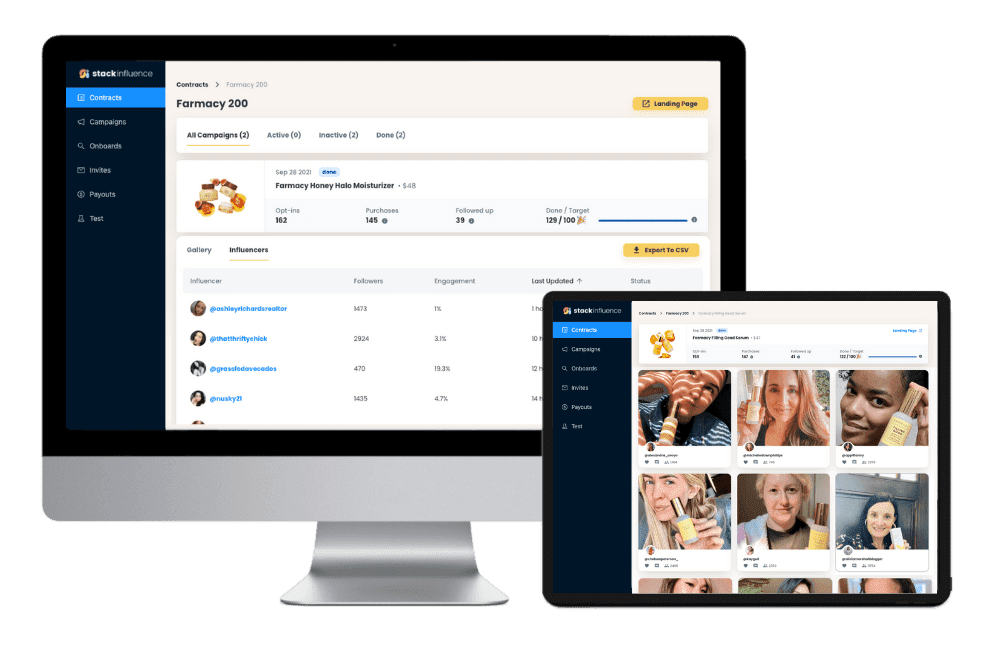
- Streamline with the right tools and partners: Managing dozens of micro influencers and tracking a full-funnel campaign can get complex. Consider using platforms or agencies that specialize in influencer marketing to save time and ensure professionalism. For example, Stack Influence helps brands connect with vetted micro influencers and run campaigns at scale, handling everything from influencer discovery to content collection. Such platforms can generate a steady pipeline of UGC and influencer posts for your brand, which you can deploy strategically across the funnel. By partnering or using tools, even lean e-commerce teams can execute campaigns that rival big-budget brands.
- Map influencers to funnel stages: Analyze where your current marketing is weakest – do you need more awareness, or are plenty of people aware but not converting? Use influencers accordingly. For awareness, work with creators who have sizeable reach in your niche (e.g., a trending TikToker for a broad product launch). For consideration, tap micro influencers known for honest reviews or detailed tutorials. For conversion, lean on those with proven influence on purchase behavior (perhaps creators who are savvy with affiliate marketing or who have a history of driving follower action). By aligning the right influencer with the right funnel stage, you ensure the content and objectives are on target.
Finally, always maintain authenticity in all these efforts. The magic of influencer marketing is the human touch – the feeling of a recommendation from a trusted person, not a faceless corporation. Empower your influencers to be honest, creative, and true to their voice. Audiences can sense authenticity, and in 2025, authenticity = influence = conversions.
Summary Table: Influencer Marketing Tactics Across the Funnel
To recap, here’s a quick overview of how influencer strategies align with each stage of the buyer’s journey:
| Funnel Stage | Goal | Influencer Activities | Key Metrics |
| Awareness (Top) | Generate brand awareness; reach new audiences. |
– Social media posts (Instagram Reels, TikToks, etc.) – Giveaways & hashtag challenges for virality – Shout-outs and product unboxings to introduce product |
Impressions, reach; Engagement (likes, shares, comments); Follower growth; traffic spike |
| Consideration (Mid) | Build trust and interest; educate consumers. |
– Product review videos or blog posts – Tutorials/how-to content featuring the product – Live Q&A sessions or demos – Influencer testimonials and UGC sharing |
Engagement quality (comment sentiment, saves); Click-throughs to website or product pages; Time spent on content; Social shares of reviews |
| Conversion (Bottom) | Drive purchase action; convert interest into sales. |
– Affiliate & promo codes shared by influencers – Shoppable posts and swipe-up links – Livestream shopping events (Instagram Live, Amazon Live) – Retargeting ads using influencer content (whitelisted ads) |
Conversions (sales) attributed to influencers; Conversion rate of influencer traffic; Number of uses of promo code; Cost per acquisition (CPA), ROI |
| Loyalty (Post-purchase) | Encourage repeat business and word-of-mouth advocacy. |
– Customers posting about their purchase (UGC) – Brand ambassador programs (long-term influencer relationships) – Featuring customer reviews and content on brand channels – Community engagement (forums, groups with influencer involvement) |
UGC volume (posts, stories shared by customers); Repeat purchase rate; Referral traffic or sales; Customer lifetime value increase |
Each stage feeds the next. A well-executed full-funnel influencer strategy creates a continuous loop: broad awareness fills the pipeline, consideration content nurtures that interest, conversion tactics seal the deal, and post-purchase advocacy brings in new prospects via happy customers. By viewing influencer marketing holistically, brands can achieve synergy that isolated campaigns miss.
Unlock the Power of Micro Influencers and Elevate your Brand Today!
Conclusion to How Full-Funnel Influencer Marketing Drives Sales
The era of treating influencer marketing as a one-off experiment or a vanity project is over. Full-Funnel Influence – from awareness to conversion in 2025 – is a proven playbook for growth. Brands that embrace influencers and content creators at every stage are reaping the rewards: more authentic engagement, higher conversion rates, and a treasure trove of reusable content and insights. For e-commerce brands and Amazon sellers, this approach can be especially potent – it builds a bridge of trust from social media scroll to checkout cart, addressing consumer needs at each step.
As you plan your marketing strategy, think about how you can integrate influencers into each phase of your funnel. Maybe it’s partnering with a niche TikTok creator to spark awareness, then using their content in ads and on your Amazon page to drive consideration and conversion. Maybe it’s turning your best customers into ambassadors who regularly post UGC. The specific tactics will vary, but the guiding principle remains: meet your customers where they are, with messages they trust, delivered by voices they relate to.
In 2025, leveraging full-funnel influencer marketing isn’t just innovative – it’s becoming essential for staying competitive. So start building those relationships with micro influencers and creators, align them with your funnel objectives, and embrace a data-driven approach to optimize results. The brands that do will turn influence into revenue, and followers into loyal customers. Now’s the time to broaden your vision of influencer marketing – from a single post to a sustained journey – and watch the impact on your business grow from top to bottom.

By William Gasner
CMO at Stack Influence
William Gasner is the CMO of Stack Influence, he's a 6X founder, a 7-Figure eCommerce seller, and has been featured in leading publications like Forbes, Business Insider, and Wired for his thoughts on the influencer marketing and eCommerce industries.
Want new articles before they get published? Subscribe to our Awesome Newsletter.
stack up your influence
turning creativity into currency
our headquarters
111 NE 1st St, Miami, FL 33132
our contact info
[email protected]
stack up your influence
turning creativity into currency
our headquarters
111 NE 1st St, 8th Floor
Miami, FL 33132
our contact info



© 2025 Stack Influence Inc
© 2025 Stack Influence Inc