
7 Top Affiliate Marketing Platforms for E-Commerce in 2025
7th
January, 2026
Influencer Marketing
Amazon Marketplace
Artificial Intelligence
TikTok Tips
As an e-commerce brand or Amazon seller, leveraging the right affiliate marketing platforms can be a game-changer for your growth. In fact, affiliate partnerships now drive roughly 16% of all online orders in the U.S., with brands seeing about $12 in revenue for every $1 spent – one reason over 80% of advertisers use affiliate programs today. The takeaway? Affiliate marketing is a high-ROI channel for reaching new customers. But choosing the wrong platform can lead to wasted time, unsatisfactory results, and missed opportunities. The right choice, on the other hand, will connect you with motivated affiliates (including micro influencers who create authentic UGC) and provide the tools to track performance and sales surges.
In this guide, we’ll explain what affiliate marketing platforms are and why they matter for e-commerce. Then, we’ll highlight 7 top affiliate marketing platforms in 2025 – including our own Stack Influence – and how to choose the best one for your business needs. Let’s dive in!
What Are Affiliate Marketing Platforms?
Affiliate marketing platforms are online systems that connect businesses (merchants) with affiliates (publishers, influencers, or partners who promote products for a commission). These platforms provide the infrastructure to manage affiliate programs – tracking referrals, managing unique links or codes, and automating commission payouts. In essence, they act as an intermediary and technology hub that makes it easy to recruit affiliates, monitor their performance, and reward them for driving sales.
Typical features of a quality affiliate platform include:
-
- Real-time tracking & analytics: Monitor clicks, conversions, and sales in real time, so you know exactly which affiliate campaigns are effective.
- Affiliate dashboards & link tools: Affiliates get their own dashboard to grab unique tracking links or promo codes and see their earnings.
- Commission management: Flexible options to set commission rates (e.g. percentage of sale or fixed bounty) and automate payouts at set intervals.
- Promotional assets: A library of banners, product images, and approved content that affiliates can use – ensuring consistent branding.
- Communication & support: Tools to message affiliates, share updates, or run affiliate newsletters, helping build strong partner relationships.
- Real-time tracking & analytics: Monitor clicks, conversions, and sales in real time, so you know exactly which affiliate campaigns are effective.
In short, affiliate marketing platforms streamline the process of running an affiliate program. Instead of manually tracking coupon codes or sales from partners, the platform automates these tasks so you can scale your affiliate marketing without losing oversight.
Why Affiliate Marketing Platforms Matter for E-Commerce
Affiliate marketing isn’t just another buzzword – it’s a proven strategy to boost revenue and brand reach for online sellers. Here are some key benefits, especially for e-commerce brands and Amazon marketplace sellers:
-
- Expanded Reach & Sales: The right affiliates can expose your products to audiences you might not reach otherwise. Affiliates often include content creators and micro influencers whose personal recommendations carry weight. Nearly half of consumers make purchases at least monthly because of influencer posts, showing how powerful these trusted recommendations can be in driving new sales for your store.
- Cost-Effective Marketing: Unlike traditional ads, affiliate marketing is largely performance-based – you pay commissions only on actual sales or conversions. This makes it low-risk and budget-friendly. You’re essentially outsourcing some marketing to partners who get rewarded when they deliver results. It’s no surprise that affiliate programs are considered one of the highest ROI channels (performance marketing spend that consistently pays for itself in revenue).
- Real-Time Tracking & Optimization: Affiliate platforms offer transparent, data-rich reporting. You can see exactly which affiliates or content pieces are driving clicks and sales. This insight lets you double down on top-performers and optimize or cut what isn’t working – ensuring your marketing efforts stay efficient and focused on tactics that convert.
- Authentic UGC & Social Proof: Many affiliates are everyday customers or niche content creators who produce honest reviews, unboxings, and other user-generated content about your products. Consumers tend to trust this kind of content far more than polished brand advertising. In fact, user-generated content is viewed as 2.5× more authentic than brand-created content, and 55% of consumers trust UGC over other marketing content. By leveraging affiliates, you also gain a trove of authentic UGC that builds social proof and credibility for your brand.
- Scalability and Reach: An affiliate program can scale as your business grows. With a good platform, there’s no limit to the number of affiliates you can manage. You can work with a handful of niche bloggers or hundreds of influencers simultaneously. As your goals expand (e.g. entering new markets or launching new products), you can quickly onboard affiliates in those niches or regions. In addition, many platforms support multi-channel tracking – whether an affiliate drives traffic via a blog, Instagram, YouTube, or email – giving you a comprehensive view of your outreach.
- Lower Customer Acquisition Cost: Because you pay on results and often a fraction of the sale as commission, affiliate marketing can reduce your overall customer acquisition cost. It’s essentially a pay-for-performance model. Affiliates also tend to bring in higher-intent customers (through genuine recommendations or targeted content), which can mean better lifetime value and retention.
- Expanded Reach & Sales: The right affiliates can expose your products to audiences you might not reach otherwise. Affiliates often include content creators and micro influencers whose personal recommendations carry weight. Nearly half of consumers make purchases at least monthly because of influencer posts, showing how powerful these trusted recommendations can be in driving new sales for your store.
In summary, affiliate marketing platforms allow e-commerce companies to tap into a salesforce of happy customers, influencers, and publishers who promote your brand on commission. You get increased sales, broader exposure, and tons of authentic content – all with a controlled, ROI-positive spend.
Now, let’s look at the top affiliate marketing platforms available and see which might align best with your business.
Unlock the Power of Micro Influencers and Elevate your Brand Today!
7 Top Affiliate Marketing Platforms in 2025
Choosing the right platform comes down to your specific needs – whether you’re an Amazon-focused seller looking to amplify via micro influencers, a DTC brand building an in-house program, or an established retailer seeking a large network. Below we break down seven of the best affiliate marketing platforms in 2025, each with its own strengths.
1. Stack Influence

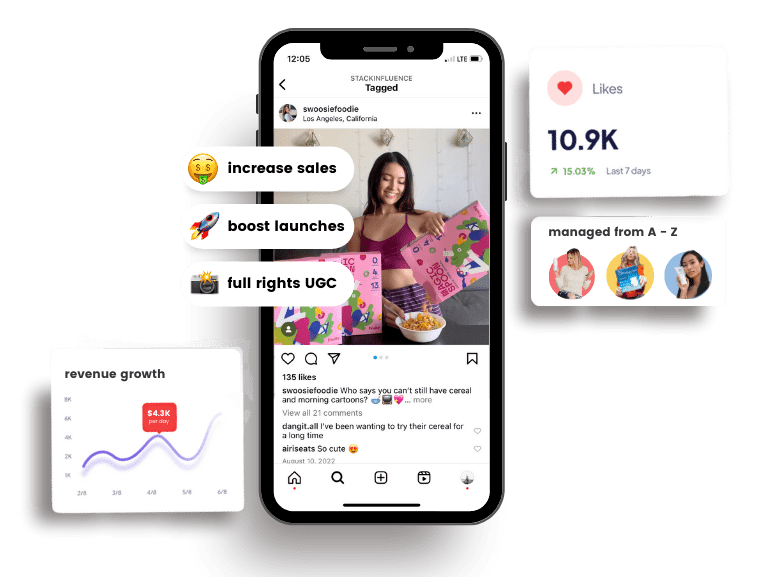
Stack Influence is a leading micro-influencer marketing platform that doubles as an affiliate engine for e-commerce brands (especially Amazon sellers). It automates influencer-driven promotions at scale, connecting businesses with a vetted network of over 700,000 social media micro influencers who can act as affiliates. These creators promote your product to their engaged followers, driving traffic and sales to your listings in exchange for product samples or commission.
What makes Stack Influence stand out is its focus on Amazon growth – it helps sellers generate a surge of external traffic and genuine reviews on Amazon, which can boost product ranking. Campaigns are fully managed: Stack Influence handles recruiting influencers, shipping out products, ensuring posts go live, and tracking all affiliate link conversions. The platform essentially creates long-term “Amazon affiliate” relationships between brands and micro influencers.
-
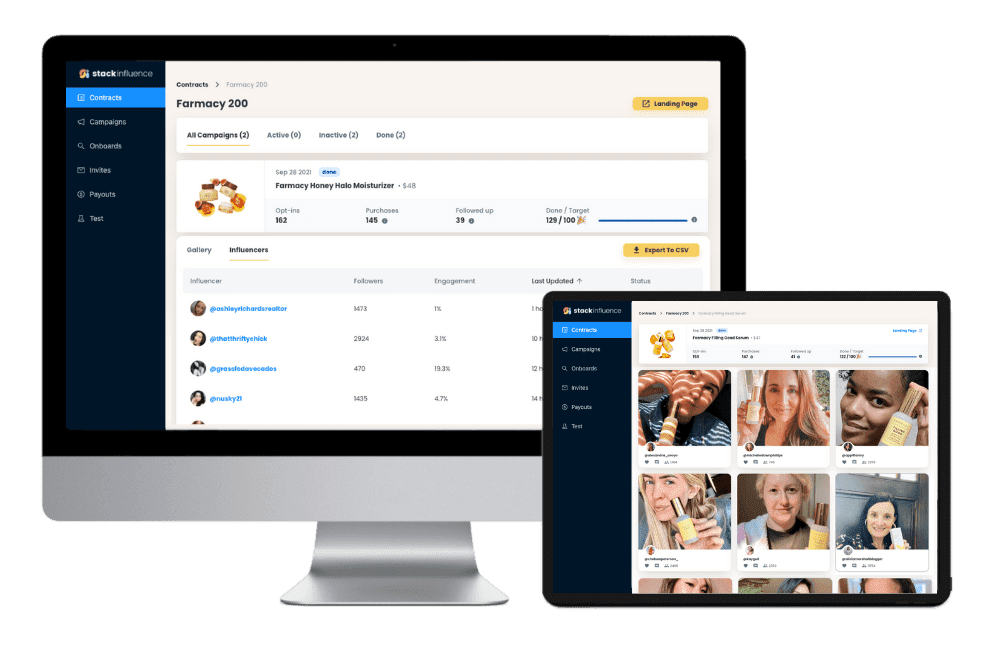
- Key benefits: Turnkey influencer affiliate campaigns, guaranteed post completion, and authentic UGC creation. Because micro influencers have tight-knit audiences, their recommendations often translate into higher conversion rates and trustworthy social proof for your brand. Stack Influence’s platform also provides an intuitive dashboard to track each influencer’s content and the sales lift from their referrals.
- Who it’s best for: Amazon marketplace sellers and DTC brands who want to leverage micro influencers at scale. If you’re launching a new product or need a burst of reviews and referral traffic on Amazon, Stack Influence is tailor-made – it’s even used by household brands (e.g. Unilever) to manage large fleets of micro influencers. It was recognized in 2024 as one of Inc. 5000’s fastest-growing marketing companies, reflecting its effectiveness and popularity in the influencer affiliate space.
- Key benefits: Turnkey influencer affiliate campaigns, guaranteed post completion, and authentic UGC creation. Because micro influencers have tight-knit audiences, their recommendations often translate into higher conversion rates and trustworthy social proof for your brand. Stack Influence’s platform also provides an intuitive dashboard to track each influencer’s content and the sales lift from their referrals.
2. Amazon Associates
The Amazon Associates Program is the world’s biggest affiliate marketing platform by reach, and a familiar starting point for many content creators. This program allows bloggers, YouTubers, and influencers to earn commissions by linking to products sold on Amazon. For brands (especially Amazon sellers), Amazon Associates represents a massive pool of potential affiliates who can promote your products. In fact, Amazon’s affiliate program is the largest in the world by participants, with millions of products available for promotion.
How it works: Amazon handles the tracking and payouts – affiliates simply use special Amazon links, and when a customer purchases (within the cookie window, usually 24 hours), the affiliate earns a small percentage of that sale. As a brand, you don’t pay affiliates directly; Amazon pays them out of the fees it collects. Your benefit is increased exposure and sales velocity on Amazon’s marketplace. For example, a tech blogger might write a gift guide that features your product with an Amazon affiliate link – every reader that clicks and buys boosts your Amazon sales (and ranking), while the blogger gets a commission from Amazon.
-
- Key benefits: Enormous scale and trust. Affiliates love Amazon’s program because of its high conversion rates (people trust Amazon and often already have accounts). For brands, this means links to your Amazon product listings can convert more easily versus links to a lesser-known site. Amazon Associates is also easy for beginners – low barriers to entry – so there’s a constant influx of micro affiliates who might choose to feature your product content.
- Considerations: You don’t have direct control over who promotes your items on Amazon Associates – affiliates choose products themselves. Smart brands, however, can encourage content creators to join the program and highlight their products (since it costs the brand nothing extra in commission). One thing to note: commission rates on Amazon are relatively modest (ranging roughly 1–10% depending on category), and the cookie duration is only 24 hours. That means affiliates only get credit for quick purchases. Despite that, the sheer volume of Amazon’s network makes it a top platform to have working in your favor.
- Key benefits: Enormous scale and trust. Affiliates love Amazon’s program because of its high conversion rates (people trust Amazon and often already have accounts). For brands, this means links to your Amazon product listings can convert more easily versus links to a lesser-known site. Amazon Associates is also easy for beginners – low barriers to entry – so there’s a constant influx of micro affiliates who might choose to feature your product content.
3. CJ Affiliate (Commission Junction)

CJ Affiliate – formerly Commission Junction – is one of the oldest and most established affiliate marketing networks, dating back to the late ‘90s. It’s a powerhouse platform known for hosting thousands of affiliate programs, including many enterprise brands and Fortune 500 companies. If you’re a mid-sized or larger e-commerce business looking for a robust network with experienced affiliates, CJ is a top choice.
Why CJ stands out: It offers a huge base of vetted affiliates across virtually every consumer category. Major retailers (fashion, electronics, home goods, etc.) and service providers run their programs through CJ, so affiliates have come to trust it as a source of reputable partnerships. CJ provides advanced tracking, a relatively intuitive interface, and useful features like deep linking (affiliates can link to any page on your site easily) and granular reporting on performance.
-
- Key benefits: Scale and quality – With CJ, you gain access to a wide pool of high-volume publishers and influencers. You can find affiliates that align with your niche by browsing categories and performance metrics. CJ also emphasizes transparency: you can see an affiliate’s history (e.g. their earnings per click, conversion rate, etc.) before approving them, which helps in selecting productive partners. For affiliates, CJ’s reliability in tracking and paying out (Net-30 payouts, multiple payment methods) makes it a trusted platform, which in turn attracts more affiliates to programs hosted here.
- Who it’s best for: Brands that are ready to scale up an affiliate program and possibly work with larger publishers, coupon sites, loyalty apps, or high-traffic content sites. For example, if you want your products featured on major deal sites or in big email newsletters, those partners are likely on CJ. Keep in mind there is an upfront cost to join (and typically monthly minimum fees for brands), so CJ is usually leveraged by businesses that already have solid revenue and marketing budget to support an affiliate channel. If you’re just starting out or on a tight budget, one of the smaller networks or software solutions might be a better first step.
- Key benefits: Scale and quality – With CJ, you gain access to a wide pool of high-volume publishers and influencers. You can find affiliates that align with your niche by browsing categories and performance metrics. CJ also emphasizes transparency: you can see an affiliate’s history (e.g. their earnings per click, conversion rate, etc.) before approving them, which helps in selecting productive partners. For affiliates, CJ’s reliability in tracking and paying out (Net-30 payouts, multiple payment methods) makes it a trusted platform, which in turn attracts more affiliates to programs hosted here.
4. ShareASale
ShareASale is a popular affiliate network particularly among small-to-mid size e-commerce businesses and niche brands. Now under the umbrella of Awin (a large global affiliate network), ShareASale offers a user-friendly platform with over 5,000 merchant programs spanning countless niches (from boutique fashion to handmade crafts to SaaS tools). It’s known for having many indie brands and unique products that affiliates can discover – essentially a “hidden gem” network for interesting offers.
Why ShareASale is great: It has a relatively low cost and easy setup for merchants, making it accessible if you’re new to affiliate marketing. The interface, while a bit dated in design, is straightforward to use. You can list your program in the ShareASale marketplace where affiliates can find you, or reach out to recruit specific partners. The network provides standard tracking and payment processing (with options like pay-per-sale, lead, or even pay-per-click). One feature affiliates appreciate is the PowerRank – a metric that highlights top-performing programs, giving even more visibility to rising brands that deliver good earnings.
-
- Key benefits: Affordability and niche reach. ShareASale has a one-time setup fee and no hefty monthly charges, which is friendly to smaller merchants. It also tends to have affiliates with niche websites or blogs browsing for new products to promote – so if you offer something unique, you might attract enthusiastic partners here more easily than on bigger networks. Additionally, some merchants report that competition for affiliates is lower on ShareASale than on giant networks, meaning you might get more attention from affiliates in your category. The platform supports flexible commission structures and even bonus campaigns (e.g., pay an extra bonus if an affiliate hits X sales in a month) to incentivize performance.
- Who it’s best for: Emerging brands, boutique online stores, or any e-commerce business looking for a straightforward affiliate solution. If you run a Shopify or WooCommerce store selling niche products, ShareASale can connect you with content creators and bloggers in your space without breaking the bank. It’s also a good testing ground – you can validate affiliate marketing for your brand on ShareASale, and later, if you outgrow it, expand to larger networks. Keep in mind, success on any network requires active effort: be sure to craft an attractive program (competitive commission, good creatives) and proactively reach out to potential affiliates.
- Key benefits: Affordability and niche reach. ShareASale has a one-time setup fee and no hefty monthly charges, which is friendly to smaller merchants. It also tends to have affiliates with niche websites or blogs browsing for new products to promote – so if you offer something unique, you might attract enthusiastic partners here more easily than on bigger networks. Additionally, some merchants report that competition for affiliates is lower on ShareASale than on giant networks, meaning you might get more attention from affiliates in your category. The platform supports flexible commission structures and even bonus campaigns (e.g., pay an extra bonus if an affiliate hits X sales in a month) to incentivize performance.
5. Rakuten Advertising
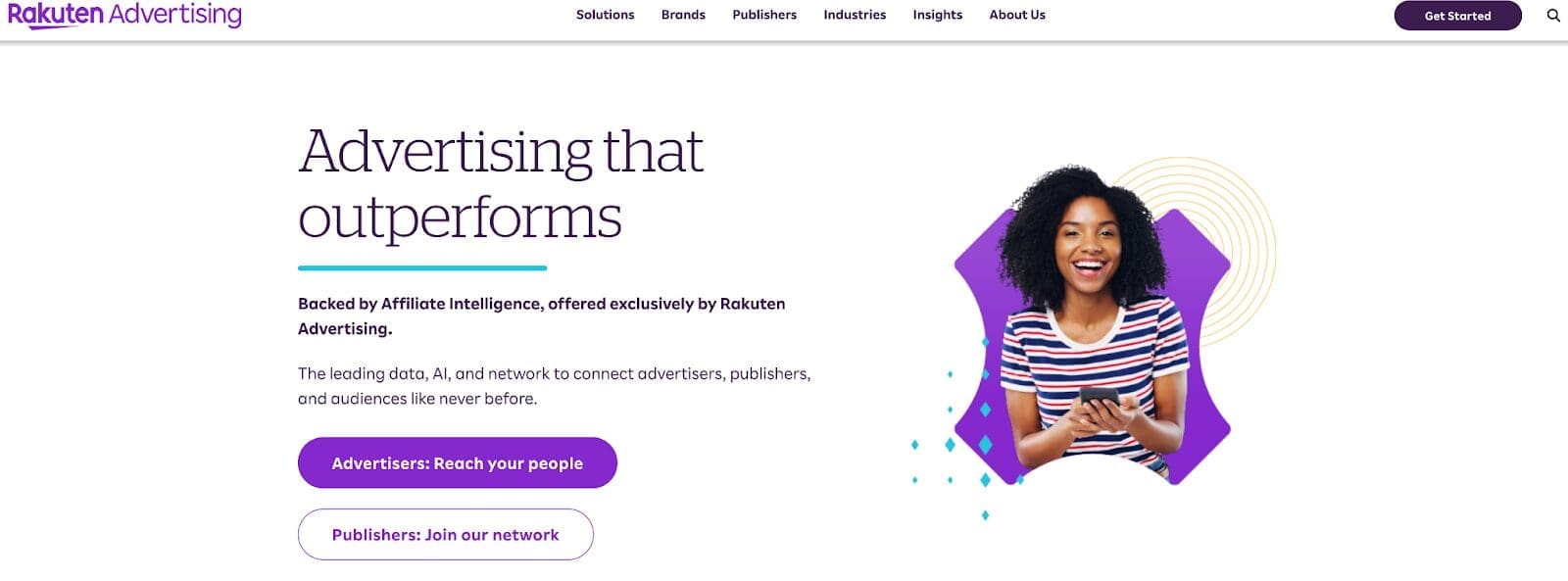
Formerly known as LinkShare, Rakuten Advertising is another long-running affiliate marketing network that consistently ranks among the top networks worldwide. Rakuten is a bit more selective and focused on quality over quantity; it manages affiliate programs for over a thousand well-established brands, especially in retail categories like apparel, beauty, electronics, and subscription services. If you prioritize a highly reputable network with strong fraud prevention and a global footprint, Rakuten is a compelling choice.
Key strengths of Rakuten: This platform is known for its robust technology and partner support. Rakuten offers advanced linking tools, a comprehensive reporting suite, and even multi-touch attribution capabilities (helping you credit affiliates who assist earlier in the customer journey, not just the last click). For brands, Rakuten’s account management can be very hands-on, ensuring your program is optimized. They also host regular affiliate events and have an extensive knowledge base to educate program managers. Another advantage is Rakuten’s international reach – they have a presence in numerous countries, which is great if you want to recruit affiliates in, say, Europe or Asia to expand your market.
-
- Key benefits: Brand safety and network quality. Rakuten has rigorous compliance and fraud detection, so you’re less likely to encounter fraudulent activity or low-quality traffic. They also attract top-performing affiliates (cashback sites, comparison shopping sites, content publishers) thanks to winning Affiliate Network of the Year awards multiple times. For example, if you want your products featured on a major cashback site or a large review portal, those partners often operate via Rakuten. Additionally, Rakuten’s name recognition among affiliates means your program listing there lends immediate credibility – affiliates know Rakuten programs pay reliably and are backed by a solid support team.
- Who it’s best for: Mid-to-large e-commerce brands that have an established customer base and want to scale further through affiliate partnerships. Also, brands looking to go global with their affiliate strategy – with Rakuten, you can consolidate management of a worldwide affiliate program under one network (instead of juggling different regional networks). Do note that Rakuten, similar to CJ, has a more involved onboarding and fee structure, so it’s typically suited for companies that are serious about investing in an affiliate channel long-term. If you’re a smaller shop, you might start on ShareASale or a DIY solution and graduate to Rakuten once you have the resources and traction.
- Key benefits: Brand safety and network quality. Rakuten has rigorous compliance and fraud detection, so you’re less likely to encounter fraudulent activity or low-quality traffic. They also attract top-performing affiliates (cashback sites, comparison shopping sites, content publishers) thanks to winning Affiliate Network of the Year awards multiple times. For example, if you want your products featured on a major cashback site or a large review portal, those partners often operate via Rakuten. Additionally, Rakuten’s name recognition among affiliates means your program listing there lends immediate credibility – affiliates know Rakuten programs pay reliably and are backed by a solid support team.
6. Impact
Impact (formerly Impact Radius) is a modern affiliate marketing platform that has quickly risen in popularity due to its innovative technology and flexible approach to partnerships. Unlike traditional networks, Impact is a SaaS-style platform that gives brands more direct control to discover and manage all types of partners – from traditional affiliates to influencers, media publishers, and even B2B partners – in one place. Many digitally savvy DTC brands and large retailers alike have adopted Impact for its ease of use and advanced features.
What sets Impact apart: The platform emphasizes automation and efficiency. It offers a clean, intuitive interface and tools like dynamic commissioning (e.g., set higher commissions for new customer sales vs. repeat customer sales), automated partner onboarding flows, and rule-based fraud protection. Impact also has a feature called “Partnership Cloud” that allows you to manage not just affiliate links but also promo codes and influencer collaborations seamlessly. Big-name advertisers like Adidas, Airbnb, and Lenovo have run programs on Impact, which speaks to its scalability. For affiliates/partners, Impact provides a consolidated dashboard where they can manage multiple brands in one login, and it often facilitates faster partner approvals (some programs on Impact let you join instantly if you meet criteria).
-
- Key benefits: Cutting-edge platform with broad partner support. If your marketing strategy goes beyond classic coupon and review affiliates and extends into influencers, ambassadors, or app partners, Impact is built to handle that breadth. You can track influencer promo code usage, app-to-app referral tracking, mobile install campaigns – all alongside normal affiliate link tracking. Impact also excels in real-time reporting and has APIs for custom integrations (for brands that want to pipe data into their own systems). Many users praise Impact’s user experience compared to older networks – tasks like creating a new deal or adjusting a commission take just a few clicks.
- Who it’s best for: Brands that want a flexible, self-service affiliate solution with room to innovate. If you’re comfortable with technology and possibly managing your program in-house (versus relying on network account managers), Impact gives you the tools to do so. It’s especially popular with direct-to-consumer brands in industries like fashion, health, fitness, and tech, where influencer marketing overlaps with affiliate marketing. Impact’s pricing model typically involves a platform fee plus a small percentage of transaction volume, so it can be cost-effective as you scale up high affiliate revenue. Overall, choose Impact if you value customization, a modern interface, and the ability to unify various partnership types in one system.
- Key benefits: Cutting-edge platform with broad partner support. If your marketing strategy goes beyond classic coupon and review affiliates and extends into influencers, ambassadors, or app partners, Impact is built to handle that breadth. You can track influencer promo code usage, app-to-app referral tracking, mobile install campaigns – all alongside normal affiliate link tracking. Impact also excels in real-time reporting and has APIs for custom integrations (for brands that want to pipe data into their own systems). Many users praise Impact’s user experience compared to older networks – tasks like creating a new deal or adjusting a commission take just a few clicks.
7. Refersion
Refersion is an affiliate and referral tracking software designed for e-commerce brands that want to run their own affiliate program in-house. It’s particularly well-known in the Shopify ecosystem – available as a Shopify app – making it a go-to for many online store owners who prefer a plug-and-play affiliate solution without joining a larger network. With Refersion, you manage every aspect of your program (recruiting affiliates, setting commissions, tracking sales) and you own the direct relationships with your affiliates.
Key features of Refersion: It integrates seamlessly with e-commerce platforms like Shopify, BigCommerce, and WooCommerce, automatically tracking referral orders with no complicated coding. You can create a custom affiliate signup page for your brand, approve or deny applicants, and even generate unique coupon codes for affiliates (useful for influencers on Instagram or TikTok who share discount codes). Refersion provides a dashboard where both you and your affiliates can see real-time performance data. One standout aspect is its scalability – Refersion claims to handle very large programs with ease. In fact, it processes over 600,000 orders per day for 60,000+ merchants using its system, which speaks to its reliability and wide adoption among online retailers.
-
- Key benefits: Full control and branding. Because it’s your in-house program, you can tailor the commission structure, branding, and rules however you want. There’s no “network” marketplace where your offer sits among competitors – you recruit affiliates through your own channels (or via Refersion’s marketplace if you choose), which often means the affiliates in your program are more dedicated and aligned with your brand. For example, you might convert happy customers into affiliates by inviting them via email or during checkout (Refersion can provide post-purchase signup prompts). This can effectively turn your loyal customers into brand ambassadors who earn a small commission for referring friends. Additionally, Refersion’s integration with Shopify is a big plus – it can pull product SKUs, manage tracking for Shopify discount codes, and sync with your store’s order data seamlessly.
- Who it’s best for: E-commerce brands (including Amazon sellers with their own sites) that want a private affiliate or “ambassador” program. If you prefer not to pay network fees or just want to start small by recruiting a handful of affiliates (maybe micro influencers or customers), Refersion is ideal. It’s commonly used by Shopify Plus stores that run ambassador or influencer programs, as well as subscription-box companies and niche brands. Keep in mind, because it’s self-managed, you’ll need to handle the outreach to find affiliates and maintain those relationships – but the upside is a highly customized program and direct connection to your advocates.
- Key benefits: Full control and branding. Because it’s your in-house program, you can tailor the commission structure, branding, and rules however you want. There’s no “network” marketplace where your offer sits among competitors – you recruit affiliates through your own channels (or via Refersion’s marketplace if you choose), which often means the affiliates in your program are more dedicated and aligned with your brand. For example, you might convert happy customers into affiliates by inviting them via email or during checkout (Refersion can provide post-purchase signup prompts). This can effectively turn your loyal customers into brand ambassadors who earn a small commission for referring friends. Additionally, Refersion’s integration with Shopify is a big plus – it can pull product SKUs, manage tracking for Shopify discount codes, and sync with your store’s order data seamlessly.
Unlock the Power of Micro Influencers and Elevate your Brand Today!
Conclusion to 7 Top Affiliate Marketing Platforms for E-Commerce in 2025
Affiliate marketing remains one of the most cost-effective and scalable marketing strategies for e-commerce brands and Amazon sellers. By now, you’ve learned how these platforms work and explored some of the top affiliate marketing platforms available – from massive networks to influencer-centric solutions. The key is to choose a platform that aligns with your goals and audience. Maybe you’ll start small with a handful of micro influencer affiliates to generate authentic buzz, or perhaps you’re ready to list your program on a big network and tap into thousands of publishers.
Whatever path you choose, remember that success comes from actively managing your program: communicate with your affiliates, provide them great creative assets or product education, and offer competitive incentives. Over time, a well-run affiliate program can drive a steady stream of new customers, higher sales, and a community of brand advocates promoting you daily.
For e-commerce entrepreneurs and Amazon sellers, affiliate marketing isn’t just about extra sales – it’s about building partnerships that amplify your brand’s reach. The platforms we discussed are simply tools to facilitate those partnerships. Pick the right tool, invest the effort to nurture your affiliate relationships, and you’ll unlock a marketing channel that grows with you and continually rewards performance. Here’s to driving more traffic, more trust, and more sales through smart affiliate strategy in 2025 and beyond!
Ready to take the next step? Consider your product niche and business stage, then try out one of the platforms above. Whether it’s launching an ambassador program on your own site or tapping into a vast influencer network via Stack Influence, the sooner you begin, the faster you’ll harness the power of affiliates to fuel your brand’s growth.

By William Gasner
CMO at Stack Influence
William Gasner is the CMO of Stack Influence, he's a 6X founder, a 7-Figure eCommerce seller, and has been featured in leading publications like Forbes, Business Insider, and Wired for his thoughts on the influencer marketing and eCommerce industries.
Want new articles before they get published? Subscribe to our Awesome Newsletter.
stack up your influence
turning creativity into currency
our headquarters
111 NE 1st St, Miami, FL 33132
our contact info
[email protected]
stack up your influence
turning creativity into currency
our headquarters
111 NE 1st St, 8th Floor
Miami, FL 33132
our contact info



© 2025 Stack Influence Inc
© 2025 Stack Influence Inc